
Salesforce has set a hard end-of-life date of February 28, 2028 for Open CTI — the JavaScript framework that every embedded softphone in Salesforce has relied on for more than a decade. It is already unavailable for newly created Agentforce Service orgs as of February 16, 2026. Meanwhile HubSpot meters native calling by the minute at the account level, and Zoho routes everything through a single PhoneBridge layer. If voice is how your revenue or service team actually talks to customers, your phone system is no longer an integration you set up once and forget. This is a practical architecture plan for deciding what to do about it — on whichever platform you run.
Key Takeaways
- Salesforce’s Open CTI framework reaches end of life on February 28, 2028 (the Spring ’28 release). On that date the Open CTI JavaScript API, call center adapters, softphone layouts, call center definition files, and any custom screen-pop or routing logic built on them stop functioning.
- This is not a single product sunset — it is the retirement of an entire integration framework, which is why it affects customers of third-party phone vendors, not just Salesforce telephony customers.
- Salesforce Sales Dialer is separately described in Salesforce’s own documentation as scheduled for retirement with no new features, though no firm end date has been published. The recommended replacement, Salesforce Voice, starts at a reported $50 per user per month on top of your existing licenses.
- The driver is AI, not housekeeping: agentic voice needs the live audio stream and a native call record inside the CRM data model. Open CTI only passed events between two systems — it never owned the media.
- HubSpot’s native calling is capacity-limited (reported at 500 / 3,000 / 12,000 minutes per account per month for Starter / Professional / Enterprise, with no rollover), so mid-market call volume almost always means a third-party dialer on the Calling Extensions SDK.
- Zoho centralizes everything behind Zoho Telephony (PhoneBridge), which is architecturally the most portable of the three — swap the provider, keep the CRM configuration.
- Budget 12–18 months for a serious migration. The expensive part is never the dialer; it is the undocumented routing, logging, and compliance logic sitting on top of it.
What Actually Changed — and Why It Is Bigger Than a Product Sunset
Open CTI is a JavaScript API framework that let third-party telephony platforms embed a dialer inside Salesforce without installing desktop software. If your reps click a phone number in Salesforce and a softphone appears in the left-hand utility bar, that is almost certainly Open CTI. It has been in maintenance mode since 2020, with no new features added.
Salesforce’s retirement notice is blunt about the reasoning: Open CTI “is built on technology that limits our ability to deliver the cutting-edge innovations that you expect.” The practical consequences at end of life, per Salesforce’s own Trailhead migration module, are specific:
- The Open CTI JavaScript API stops working.
- Call center adapters supplied by telephony partners stop working.
- Softphone layouts and call center definition files stop working.
- Any custom CTI logic you wrote — screen pops, call routing rules, auto-case creation, wrap-up prompts — stops working.
That last bullet is where the cost lives. Most organizations we assess cannot produce a list of what their CTI layer actually does. The dialer is a vendor’s problem; the fifteen Apex triggers, flows, and Lightning components wired to call events are yours.
Separately, and often confused with the Open CTI story, Salesforce Sales Dialer — the inexpensive outbound add-on for sales teams, roughly $5 per user per month — is described in Salesforce documentation as scheduled for retirement with no new features or enhancements being added. As of late 2026 it is still sold, with no published end-of-life date. Treat it as a product you should not build new processes on.
Why Every Vendor Is Re-Platforming Voice at the Same Time
It is tempting to read this as Salesforce clearing out old code. The better reading is that voice is being rebuilt as a first-party data channel because AI agents cannot work with an event bridge.
Open CTI passed messages: a call arrived, here is the caller ID, open this record. The audio itself never entered Salesforce. An AI agent that needs to transcribe in real time, detect intent, surface a next-best action mid-call, or answer the phone outright needs the media stream and a native call object it can read and write.
That is exactly what the replacement delivers. Salesforce’s official migration guidance highlights native VoiceCall records connected directly to Contact, Case, and Account records, real-time recommendations and automated call summaries through Service Rep Assistant, native supervisor queue and live-call monitoring, and voice unified with email, chat, and messaging in one workspace. Agentforce Voice went generally available in October 2025 with native connections to Amazon Connect, Five9, Genesys, NiCE, and Vonage; Japanese-language support reached GA in April 2026, and voice in the Agentforce Mobile SDK moved to GA in the Summer ’26 release. Coverage is still largely US and Canada for outbound.
The same logic is playing out elsewhere. HubSpot’s Fall 2026 Spotlight lists Customer Agent answering inbound calls by voice with handoff to a rep (public beta), voice input to Breeze Assistant on mobile (public beta), and sequential IVR routing (GA). None of that is possible if the phone system is a browser tab beside the CRM.
Where HubSpot and Zoho Actually Sit
HubSpot: native calling is real, but it is metered
HubSpot provides calling natively through Twilio, available on Sales Hub and Service Hub Starter, Professional, and Enterprise. The constraint buyers miss is that minutes are an account-level pool, not per-seat. Widely reported allowances are 500 minutes per month on Starter, 3,000 on Professional, and 12,000 on Enterprise, shared across every user, with no rollover of unused minutes. Professional and Enterprise can buy capacity packs of 1,000 additional minutes for about $50 per month; Starter cannot.
Run the arithmetic before you assume native calling is free. Eight reps averaging two hours of talk time a day will burn through a Professional allowance in roughly the first week and a half of the month. That is why most mid-market HubSpot shops land on a third-party dialer built on the Calling Extensions SDK, which embeds the provider’s dialer in an iframe inside HubSpot and writes call engagements back. Notably, that SDK now supports inbound calling via a supportsInboundCalling flag — historically the gap that pushed service teams off HubSpot calling entirely.
Zoho: one integration layer, many providers
Zoho took the opposite architectural bet. Zoho Telephony, still widely called PhoneBridge, is a single integration point between Zoho apps and cloud PBX services — Zoho Voice or a third-party provider. It serves Zoho CRM, Desk, Recruit, Bigin, SalesIQ, and Zoho One, and provides click-to-call, screen-pop caller identification, call recording, IVR, CDR logging, and in-app notes. Third-party tallies put the supported provider marketplace somewhere between 50 and 100 vendors, including RingCentral, Twilio, Aircall, Vonage, Amazon Connect, CloudTalk, Exotel, and Ozonetel.
For Zoho’s own telephony, the Enterprise Telephony Standard plan is listed at $49 per month billed annually, including ten agents per admin user, with per-minute call charges and credit-based add-ons (a power dialer, for instance, is priced in credits per user per month) on top. The important point for architecture is portability: because provider configuration sits in one layer, changing phone vendors in Zoho rarely means rebuilding CRM logic.
| Dimension | Salesforce | HubSpot | Zoho |
|---|---|---|---|
| Integration framework | Open CTI (retires Feb 28, 2028) → Salesforce Voice / Partner Contact Center | Native Twilio calling + Calling Extensions SDK for third parties | Zoho Telephony (PhoneBridge) as single integration layer |
| Forced migration? | Yes — hard date, framework-level | No announced calling framework retirement | No announced retirement |
| Reported entry cost | Salesforce Voice from $50/user/mo with your own telephony; $75–$200/user/mo with bundled Amazon Connect minutes | Included minutes by tier (500 / 3,000 / 12,000 per account per month); +$50 per 1,000-minute pack | Zoho Voice Enterprise Telephony Standard from $49/mo annually (10 agents per admin) plus per-minute charges |
| Keep your current phone vendor? | Yes, via certified partner telephony on AppExchange | Yes, via Calling Extensions SDK | Yes, via PhoneBridge marketplace |
| Native AI voice status | Agentforce Voice GA since Oct 2025; US/Canada outbound focus | Customer Agent voice in public beta (Fall 2026) | Zia-assisted call handling; voice agent maturity trails Salesforce |
A Six-Step Voice Architecture Plan
- Inventory the dependencies, not the dialer. Export every Apex trigger, flow, Lightning component, softphone layout, and call center definition file that references call events. In HubSpot, list every workflow triggered by call activity or outcome. In Zoho, document PhoneBridge-driven workflow rules and blueprints. This inventory is the actual scope of your project, and it almost always surprises people.
- Measure real talk minutes per rep per month. Pull 90 days of call detail records. You need a defensible number before you can compare a per-seat platform fee against a metered minute pool against bring-your-own-carrier pricing. Guessed volumes produce migration budgets that are wrong by multiples.
- Decide whether voice is a sales motion or a service motion — or both. A ten-rep outbound team and a thirty-seat support queue want different things. Outbound teams need dialing velocity, local presence, and sequence integration. Service teams need queueing, IVR, skills-based routing, supervisor monitoring, and recording retention. Buying one product for both needs is the most common and most expensive mistake in this category.
- Pick your lane deliberately. On Salesforce the realistic options are partner telephony with your existing CCaaS vendor (keep NICE, Five9, Genesys, Vonage, Talkdesk; replace only the Salesforce-side layer), Salesforce-connected Amazon Connect, or a full move to Agentforce Contact Center. On HubSpot it is native calling versus a Calling Extensions SDK partner. On Zoho it is Zoho Voice versus a PhoneBridge provider. Write down which one you chose and why — that document is what protects you in the next renewal cycle.
- Rebuild the call data model before you rebuild the dialer. Native call records (VoiceCall in Salesforce, call engagements in HubSpot, call logs in Zoho) are what your reporting, QA, and AI features consume. Decide now which fields carry disposition, outcome, recording consent, and transcript, and make them mandatory. Teams that skip this step get a working phone and broken dashboards.
- Pilot with one queue, in production, for a full month. Not a sandbox demo. Pick a single low-risk queue, run real traffic, and compare call quality, logging accuracy, and supervisor visibility against the incumbent. Only then schedule the cutover.
Five Mistakes We See Repeatedly
- Treating February 2028 as far away. Experienced migrations of this type run 12–18 months once discovery, design, testing, change management, and deployment are counted. A 2027 start is a rushed project; a 2028 start is an outage.
- Assuming your phone vendor is handling it. Your vendor will update its connector. It will not rebuild your custom screen-pop logic, your auto-case creation, or your call-disposition-driven workflows.
- Comparing seat prices and ignoring minutes. On Salesforce Voice the platform fee and the telephony minutes typically arrive as separate bills. On HubSpot the minutes are a shared pool that silently runs out. A true comparison needs both lines.
- Letting recording and consent rules get rebuilt by accident. Two-party consent states, PCI pause-and-resume, and retention schedules are usually encoded in the old CTI layer. Migrating voice without re-validating these is a compliance incident waiting to happen — especially in healthcare, lending, and insurance.
- Buying the AI voice agent before fixing routing. An AI agent on top of bad queue design produces faster bad outcomes. Routing first, agents second.
CRM Experts Online’s Perspective
We spend a lot of time inside orgs where the telephony integration was configured by a departed admin, documented nowhere, and quietly load-bearing. The Open CTI retirement is painful for exactly that reason — it forces an audit most teams have deferred for years.
Our honest position: the deadline is an opportunity, not just a tax. Voice is the richest customer data your business generates and almost nobody uses it. For most of our clients, the conversation itself — what the customer objected to, what they asked about twice, which competitor they named — never reaches the CRM in any queryable form. The new generation of voice frameworks changes that, because the transcript lands as structured data attached to the account. That is worth more than the AI phone agent everyone is demoing.
So we tell Salesforce clients to scope the dependency audit now and make the platform decision in 2026, not 2027 — partner telephony with your existing CCaaS vendor is usually the lowest-risk path, and the Salesforce-side rebuild is the real work. We tell HubSpot clients to pull their minute consumption report before renewal, because the native-versus-SDK decision is almost always answered by that one number. We tell Zoho clients they have the most flexibility of the three and should use it: standardize on PhoneBridge, keep provider choice open, and avoid writing provider-specific logic into workflows.
And whichever platform you run: if your reps currently log calls manually, fix that in this project. No voice architecture survives a process that depends on a salesperson remembering to type what happened.
FAQ
When exactly does Open CTI stop working? February 28, 2028, aligned to the Spring ’28 release. Salesforce has also made Open CTI unavailable for newly created Agentforce Service orgs as of February 16, 2026, so new implementations cannot adopt it at all.
We use a third-party phone system, not Salesforce telephony. Does this affect us? Yes, and this is the most misunderstood part. Open CTI is the framework your third-party dialer uses to embed itself in Salesforce. When the framework retires, that embedded experience and its adapters stop working regardless of who your carrier is.
Do we have to replace our phone vendor? No. Salesforce supports certified partner telephony integrations through AppExchange, so you can keep an existing CCaaS provider and replace only the Salesforce-side integration layer. Whether you should keep them is a separate commercial question worth asking while you have leverage.
What will this cost? Reported list pricing for Salesforce Voice is $50 per user per month with your own telephony provider, and $75, $125, or $200 per user per month with bundled Amazon Connect minute packages of 750, 2,000, or 5,000 minutes; Agentforce Contact Center is reported around $125 per user per month. Those sit on top of your Service Cloud licenses, and all Salesforce pricing is negotiable. Expect professional services for the rebuild to be a comparable line item in year one.
Is HubSpot’s native calling good enough for a real sales team? For low-volume teams, yes. For anything approaching full-time phone work, the account-level minute pool becomes the binding constraint, and a third-party dialer on the Calling Extensions SDK is usually the better economics. Inbound calling through that SDK is now supported, which closes the historical gap.
Can Zoho users keep their current provider long-term? Zoho has announced no equivalent framework retirement, and PhoneBridge is designed as a provider-agnostic layer connecting CRM, Desk, Bigin, Recruit, SalesIQ, and Zoho One. That is the most portable of the three architectures today.
Should we deploy an AI voice agent as part of this migration? Pilot it, do not bet the project on it. Agentforce Voice has been GA since October 2025 and is the most mature option; HubSpot’s Customer Agent voice is still in public beta as of the Fall 2026 release. Get routing, logging, and recording compliance correct first, then layer the agent onto a queue you can measure.
What is the single first thing we should do? Run the dependency inventory in step one. You cannot scope, budget, or schedule this work until you know what your current CTI layer silently does.
Conclusion
A framework retirement with a published date is the rare kind of deadline you can actually plan around. The organizations that will handle this badly are the ones that read “2028” and file it — then discover in late 2027 that their call routing, case creation, and consent handling all live in code nobody understands. The ones that handle it well will use the forced migration to finally get conversation data into the CRM where it can be reported on, coached against, and eventually handed to an AI agent.
If you run Salesforce, HubSpot, NetSuite, or Zoho and voice matters to your revenue or service operation, CRM Experts Online can run the dependency audit, model the real cost of each path against your actual call volumes, and execute the rebuild — including the call data model and compliance controls most migrations leave until last. Schedule a consultation and bring 90 days of call detail records; that is all we need to tell you what this will take.
Further Reading
- Salesforce Help: Open CTI Retirement
- Trailhead: Prepare for Open CTI Retirement and Migration Strategies
- Salesforce: Moving on from Open CTI — How to Modernize Your Contact Center for the AI Era
- Kenway Consulting: Salesforce Open CTI Retirement Migration Guide
- CloudTalk: Salesforce Dialer Pricing 2026 — Real Cost and Retirement News
- Redress Compliance: Salesforce Service Cloud Voice Pricing in 2026
- Salesforce Ben: Salesforce Launches Agentforce Voice
- HubSpot Developers: Calling Extensions SDK
- HubSpot Developers: Receive Incoming Calls
- HubSpot Knowledge Base: Technical Requirements for the Calling Tool
- HubSpot Fall 2026 Spotlight
- Zoho: What Is Zoho Telephony?
- Zoho PhoneBridge: Cloud Telephony Integrations for Zoho
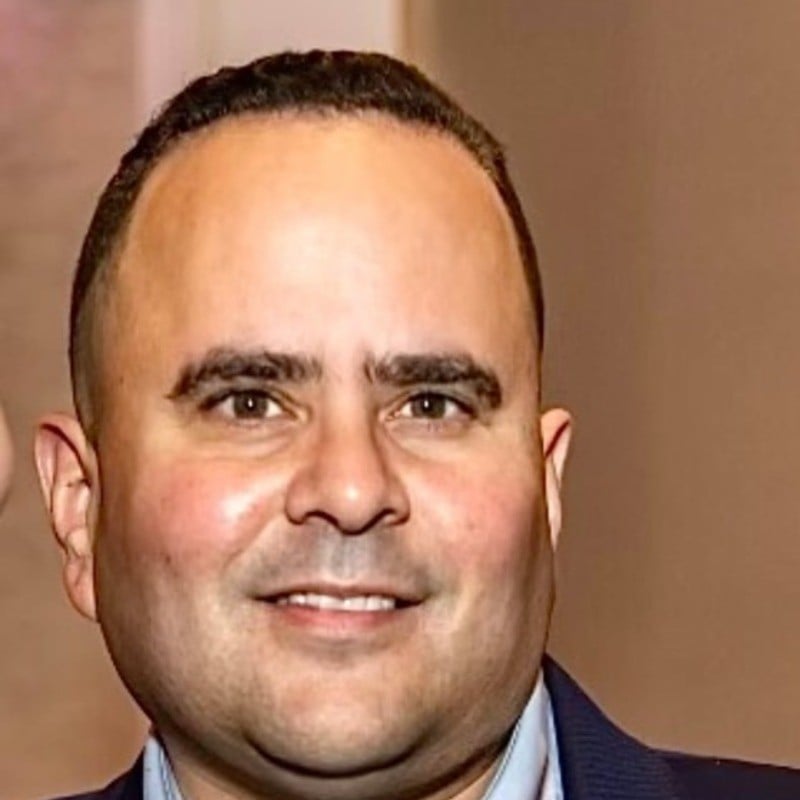
CRM & ERP Enterprise Technology Expert and Entrepreneurial Executive with 20+ years of leading CRM, ERP, Customer Experience, and Block-chain initiatives and projects across internal and customer facing technologies. Proven success in closing large deals in Pre Sales customer facing engagements and deploying enterprise wide CRM & Customer Experience solutions internationally and domestically.