
Zoho CRM’s Marketing Attribution feature is being shut off. HubSpot’s attribution report builder no longer offers U-shaped, W-shaped, J-shaped, or Inverse J-shaped models — it offers one model called Empirical instead. Google removed four attribution models from Ads and Analytics outright and made data-driven attribution the default. Salesforce’s answer, Einstein Attribution, assigns credit using a model whose math even experienced Salesforce consultants describe as opaque. If your marketing budget is defended with a number from any of these reports, the thing producing that number is changing underneath you — and in at least one case, disappearing entirely.
Key Takeaways
- Zoho’s help documentation states that Marketing Attribution “has been discontinued for new users as of July 21 and will be retired for existing users by January 31.” The notice gives no year — which is itself a planning problem for anyone relying on the feature.
- HubSpot’s current report builder documentation lists five models: First Touch, Last Touch, Linear, Time Decay, and Empirical, with Empirical explicitly replacing the four position-based models.
- Google retired first-click, linear, time-decay, and position-based models from Ads and GA4 in 2023, citing adoption below 3% of conversions, leaving three reporting models with data-driven as the default.
- The direction across every vendor is the same: fewer rules you choose, more models the vendor infers — and less ability to explain to your CFO why a campaign got the credit it got.
- Meanwhile a genuinely new acquisition channel arrived. HubSpot now classifies AI assistant traffic as its own source, “AI Referrals,” with the AI platform domain in Drill-down 1 — and almost nobody has an attribution model for it.
- The practical response is not to pick a better model. It is to own your touchpoint data, govern your inputs, report a range instead of a point estimate, and validate with holdout tests.
Three Vendors, Three Retirements, One Direction
Attribution modeling has always been a political artifact as much as an analytical one. The model you choose determines whether the trade show, the nurture email, or the last-click branded search gets credit for a six-figure deal — and therefore whose budget survives next quarter. For roughly a decade, CRM vendors handled that politics by giving you a menu: pick first touch, pick W-shaped, pick full path, and defend your choice.
That menu is shrinking, in three different ways, at the same time.
Zoho: the feature is going away
Zoho CRM’s Marketing Attribution documentation carries a discontinuation notice: the feature is closed to new users as of July 21 and will be retired for existing users by January 31. The notice omits the year. Read in context — the page is live now, with the new-user cutoff already in the past — that points to January 31, 2027, but we’d advise any client depending on it to get the date confirmed in writing by their Zoho account team rather than inferring it from a help article.
What’s being retired is not trivial. The same page documents six models: First Touch and Last Touch (100% to a single touchpoint), U Shape (40/40 split between first and last, 20% spread across the middle), W Shape (30% each to lead creation, deal creation, and deal won, with 10% spread across the middle), Linear, and Time Decay. If your Zoho dashboards reference campaign-sourced revenue today, those numbers have an expiration date.
HubSpot: four models became one
HubSpot’s Create attribution reports page (last updated August 18, 2026) lists five selectable models — First Touch, Last Touch, Linear, Time Decay, and Empirical — and states plainly that “The Empirical model replaces the U-shaped, W-shaped, J-shaped, and Inverse J-shaped models. It uses historical interaction data to weigh interaction types.”
Worth knowing before you go looking: HubSpot’s companion page, Understand attribution reporting (last updated October 20, 2026), still documents all nine legacy models with their exact weightings. Two first-party pages, two different answers, the older one carrying the newer change. When we audit a client’s reporting, this is exactly the kind of discrepancy that produces a meeting where marketing and finance are both certain and both reading real documentation.
The replacement is a different species of model. Position-based models were arbitrary but auditable: anyone could verify that W-shaped gave 30% to deal creation. Empirical weights interaction types by how distinctive they are in observed conversion paths — so if page views are common and form submissions are rare, form submissions may carry more weight. That is a more defensible statistical idea. It is also a number you can no longer reproduce by hand in a spreadsheet when the CFO asks you to.
Google: the precedent
None of this is new behavior for the industry. Google removed first-click, linear, time-decay, and position-based models from Google Ads and GA4 across 2023, switching remaining conversion actions over in September 2023, and made data-driven attribution the default. The stated reason was adoption: fewer than 3% of conversions in Google Ads used those models. GA4 now reports on three models, with data-driven as the default.
Three vendors, the same trajectory. The rules-based model is being treated as legacy, and the vendor’s inferred model is becoming the only option.
Where Native CRM Attribution Stands Right Now
| Platform | Models available | What it costs / requires | Status |
|---|---|---|---|
| HubSpot | First Touch, Last Touch, Linear, Time Decay, Empirical | Contact Create Attribution: Marketing Hub or Content Hub Professional/Enterprise. Deal Create and Deal Revenue Attribution: Marketing Hub Enterprise only | Active; four position-based models replaced by Empirical |
| Salesforce | Customizable Campaign Influence with first-touch, last-touch, even distribution, and custom weighted models | Enterprise edition and up; custom models typically built with Flow | Active; the configurable option |
| Salesforce Einstein Attribution | A single machine-learning “Data-Driven Model” | Account Engagement Advanced/Premium plus Salesforce Enterprise and up; depends on Connected Campaigns and Customizable Campaign Influence; needs meaningful opportunity contact role coverage | Active; credit assignment is not hand-auditable |
| Zoho CRM | First Touch, Last Touch, U Shape, W Shape, Linear, Time Decay | Closed to new users | Being retired for existing users — date stated as January 31, year unspecified |
| Zoho Marketing Automation | Lead attribution reports with single- and dual-touch models | Included in Zoho Marketing Automation plans | Active, but narrower than CRM’s retiring feature |
| GA4 | Data-driven (default), paid and organic last click, Google paid channels last click | Free tier | Four models removed in 2023 |
The Explainability Problem Nobody Is Pricing In
Salesforce’s Einstein Attribution is the clearest preview of where this ends. It requires Account Engagement Advanced or Premium on top of Salesforce Enterprise or above, and it wants real data volume — the practitioner guidance is at least 50 opportunity contact roles for the model to perform sensibly, and Salesforce’s own setup guidance recommends having roughly 100 opportunities with contact roles before expecting useful output. To compensate for the chronic reality that reps don’t create opportunity contact roles, Einstein generates virtual opportunity contact roles by mining tasks, emails, and events for involved contacts, claiming up to 10x greater attribution coverage.
That is a genuinely clever fix for a genuinely real data-hygiene problem. But look at what it does to accountability. In the comments on that same deep-dive, a practitioner asks why one email received 99% of the credit across four touchpoints. There is no satisfying answer available, because the model doesn’t expose one.
Here is the uncomfortable trade every CRM buyer is now being handed: rules-based models were wrong in a way you could explain. Data-driven models are plausibly less wrong, in a way you cannot explain. For a marketing team defending spend to a CFO who wants to know why the $40,000 conference got 4% of the credit, that distinction is the entire conversation.
And the inputs are still fragile in ways the model can’t fix. HubSpot documents the exclusions explicitly: revenue attribution only counts deals in a closed-won stage with at least one associated contact and populated Amount, Create date, and Close date. Sales calls, meetings, and one-to-one emails are excluded unless associated with both the contact and the deal record. One-to-one emails that got no reply don’t count. Marketing email clicks from a contact’s secondary email address don’t count. Page views require the HubSpot tracking code; ad and social clicks require connected accounts. And the model processes up to 100,000 associations or activities per deal. A smarter model on top of partial data is still a model on top of partial data.
Then There’s the Channel With No Model At All
While vendors consolidate models for the channels they already understand, a new one has arrived that none of the models were built for. HubSpot’s traffic source documentation (last updated August 4, 2026) now lists AI Referrals as one of ten first-class traffic sources, alongside organic search and paid social. Drill-down 1 records the AI platform domain — chatgpt.com, claude.ai — and Drill-down 2 picks up the campaign name from utm_campaign if one is present.
That’s a real step forward, and it exposes the gap. A buyer who asks an assistant to compare three vendors, reads a synthesized answer citing your content, and lands on your pricing page a week later via branded search generates a last-touch credit of “organic search — branded.” The actual decisive interaction left no trace on your site at all. We are going to spend the next two years watching organizations under-invest in the content that AI assistants cite, because no attribution model gives it credit. Third-party benchmark numbers on AI referral volume vary wildly right now and we’d treat all of them as directional at best — but the structural blind spot is not in dispute.
CRM Experts Online’s Perspective
We implement and clean up these systems for a living, and we’ll say something unpopular: most of the organizations arguing about which attribution model to use should not be arguing about models at all. The model is usually not the binding constraint. The data feeding it is.
When we audit attribution for a client, the finding is almost never “you picked the wrong weighting.” It’s that 40% of closed-won opportunities have no contact roles, UTM parameters are applied inconsistently across three agencies, the inside sales team books meetings that never get associated to deals, and the deal Amount field is populated after close by finance in a separate system. Change the model under those conditions and you get a different wrong answer.
So here is what we actually recommend, given what the vendors are doing:
- Export the history before the retirement date. If you’re on Zoho CRM’s Marketing Attribution, pull your model outputs into Zoho Analytics or a warehouse now, while the feature still runs. Retired features don’t leave a backfill behind, and you will want the before-and-after comparison when your numbers change.
- Keep attribution data in a layer you own. Touchpoints, UTMs, campaign membership, and opportunity contact roles should live in your CRM and your warehouse — not exclusively inside a vendor report you can’t recompute. When the vendor swaps models, you want to be able to reproduce last year’s numbers both ways.
- Fix the inputs before you touch the model. Enforce opportunity contact roles with validation or required fields at a specific stage gate. Standardize UTM taxonomy and publish it as a single governed document. Make activity-to-deal association automatic rather than a rep’s discretionary habit. This is unglamorous work and it moves attribution accuracy more than any model choice.
- Pick a model per decision, not per company. First touch answers “where should demand generation spend go?” Last touch answers “what closes?” Multi-touch or Empirical answers “what is the mix contributing?” Running one model as corporate truth guarantees that every team whose channel loses under that model will quietly build a shadow spreadsheet.
- Report the spread, not the point estimate. Run two models and tell leadership that the trade show sourced somewhere between 9% and 22% of pipeline depending on model. That’s a more honest and more usable number than a single figure with false precision — and it inoculates you against the inevitable day the vendor changes the math.
- Add self-reported attribution. A single “How did you first hear about us?” free-text or picklist field on demo request forms, written to a CRM field and reported alongside the model, is the cheapest available instrument for the channels your tracking code can never see — podcasts, Slack communities, word of mouth, AI assistants.
- Validate with holdouts, not models. Turn a channel off in one region for six weeks and measure pipeline. Geo holdouts and incrementality tests are the only methods here that establish causation. Attribution models describe correlation in observed paths, and no amount of machine learning changes that.
- Instrument AI referrals now. Tag the traffic, report on it separately, and watch conversion quality rather than volume. Even a small, high-intent channel deserves a named line in the report rather than being dissolved into “direct.”
FAQ
Is Zoho CRM’s Marketing Attribution definitely being retired? Zoho’s own NextGen help documentation says it has been discontinued for new users as of July 21 and will be retired for existing users by January 31. The notice does not state a year. Get the date confirmed by your Zoho account team before building a migration timeline around an inference.
If HubSpot removed W-shaped, what happens to my existing W-shaped reports? HubSpot’s report builder documentation now offers Empirical in place of the four position-based models, while a separate HubSpot page still documents the legacy nine. Because the two pages disagree, check what your own portal actually offers in the attribution report builder, and snapshot the current numbers before any change takes effect so you can quantify the shift.
Which HubSpot tier do I need for revenue attribution? Per HubSpot’s documentation, Contact Create Attribution is available with Marketing Hub or Content Hub Professional and Enterprise. Deal Create Attribution and Deal Revenue Attribution are Marketing Hub Enterprise only. That tier gap is frequently the real reason a mid-market team has no revenue attribution at all.
Is Einstein Attribution worth the license cost over Customizable Campaign Influence? Only if you have the data volume and the opportunity contact role coverage to feed it — and only if your stakeholders will accept credit allocations they can’t hand-verify. If your reporting has to survive a budget defense with finance, a transparent custom weighted model in Customizable Campaign Influence is often the more practical answer.
Why do my CRM attribution report and my ad platform disagree so badly? They’re measuring different things with different rules. Your ad platform counts conversions it can claim within its own lookback window using its own model; your CRM counts closed-won revenue against tracked interactions, excluding anything its tracking requirements miss. Expect disagreement, and reconcile direction of travel rather than absolute numbers.
Do we need a dedicated attribution tool? Sometimes — particularly for long, multi-stakeholder B2B cycles or genuine multi-touch requirements the native tools don’t cover. But buying one before fixing contact roles, UTM governance, and activity association just relocates the problem to a more expensive system.
How should we handle traffic from AI assistants? Treat it as its own named channel. HubSpot already classifies AI Referrals as a distinct traffic source with the AI platform domain available as a drill-down. Report it separately, watch conversion quality, and add self-reported attribution on forms to catch the journeys that pass no referrer at all.
What’s the single highest-return attribution fix for a mid-market team? Mandatory, enforced contact roles on opportunities — or the equivalent contact-to-deal association in HubSpot and Zoho. Nearly every attribution model in every platform depends on knowing which humans were attached to the deal. When that link is missing, the model is guessing, and increasingly it’s guessing on your behalf without telling you.
Conclusion
Attribution is quietly moving from something you configure to something your vendor computes. Zoho is removing the feature. HubSpot replaced four auditable models with one inferred one. Google did this three years ago and never looked back. Salesforce will sell you a machine-learning model that works better and explains less. None of these are bad engineering decisions — but collectively they mean the number you use to defend marketing spend will soon be produced by a process you cannot reconstruct, fed by data whose gaps you are still responsible for.
The teams that come out of this well will be the ones who spent this year on inputs and instrumentation rather than on model debates: clean contact roles, governed UTMs, automatic activity association, attribution data in a layer they own, and a habit of reporting ranges validated by real holdout tests.
If you’re on Zoho CRM and relying on Marketing Attribution, or on HubSpot and about to discover your reports changed shape, schedule a consultation with CRM Experts Online. We’ll audit what your attribution is actually measuring, identify which inputs are breaking it, and build reporting that survives the next time a vendor changes the math.
Further Reading
- Zoho CRM — Marketing Attribution (with discontinuation notice)
- HubSpot — Create attribution reports (Empirical model)
- HubSpot — Understand attribution reporting (model definitions and exclusions)
- HubSpot — Understand Original and Latest traffic source properties (AI Referrals)
- Search Engine Land — Google confirms sunset details for 4 attribution models in Ads and Analytics
- Salesforce Ben — Pardot Einstein Attribution: A Deeper Dive
- Salesforce Ben — Complete Guide to Salesforce Campaign Influence
- Salesforce Help — Set Up Einstein Attribution
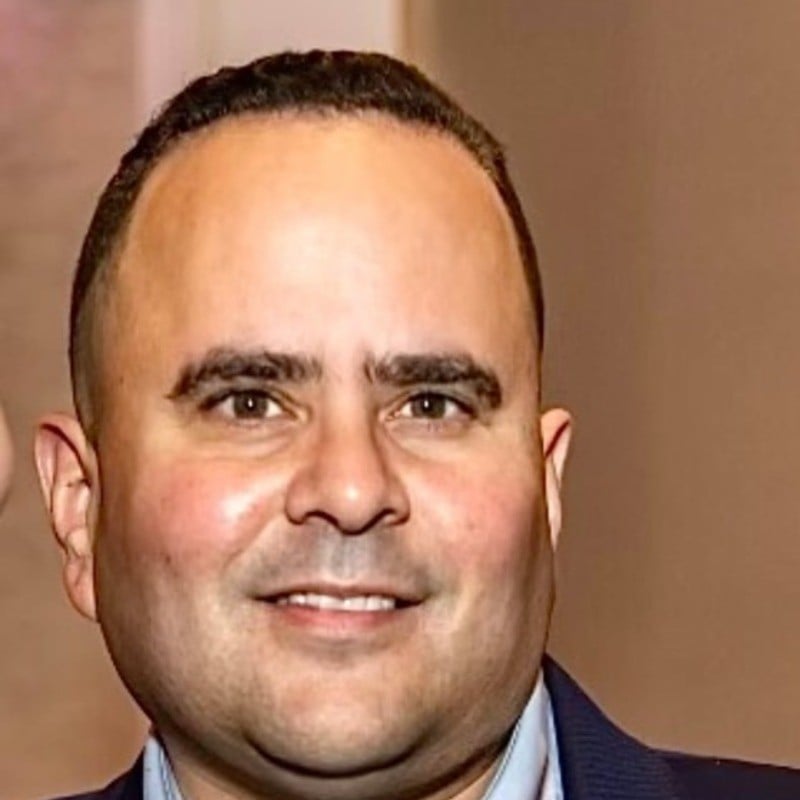
CRM & ERP Enterprise Technology Expert and Entrepreneurial Executive with 20+ years of leading CRM, ERP, Customer Experience, and Block-chain initiatives and projects across internal and customer facing technologies. Proven success in closing large deals in Pre Sales customer facing engagements and deploying enterprise wide CRM & Customer Experience solutions internationally and domestically.