
Sam Altman is right that we waste a lot of computing power. My own AI infrastructure runs at about 54% capacity. The fix he implies is to centralize. I’m not convinced that’s the right trade.
Key Takeaways
- Altman’s point is fair. He called it “quite terrible” that memory in people’s PCs sits unused about 95% of the time, and has admitted there is “a ton of waste” in AI spending.
- Idle capacity is everywhere. Even a well-used private AI server, like ours, sits idle close to half the time.
- Utilization measures how hard a machine works, not who controls it. Pushed to its limit, the efficiency argument ends with a few companies owning the compute and everyone else renting it.
- Owned capacity buys privacy, price stability, model choice and resilience. That’s a reasonable price for some idle hours.
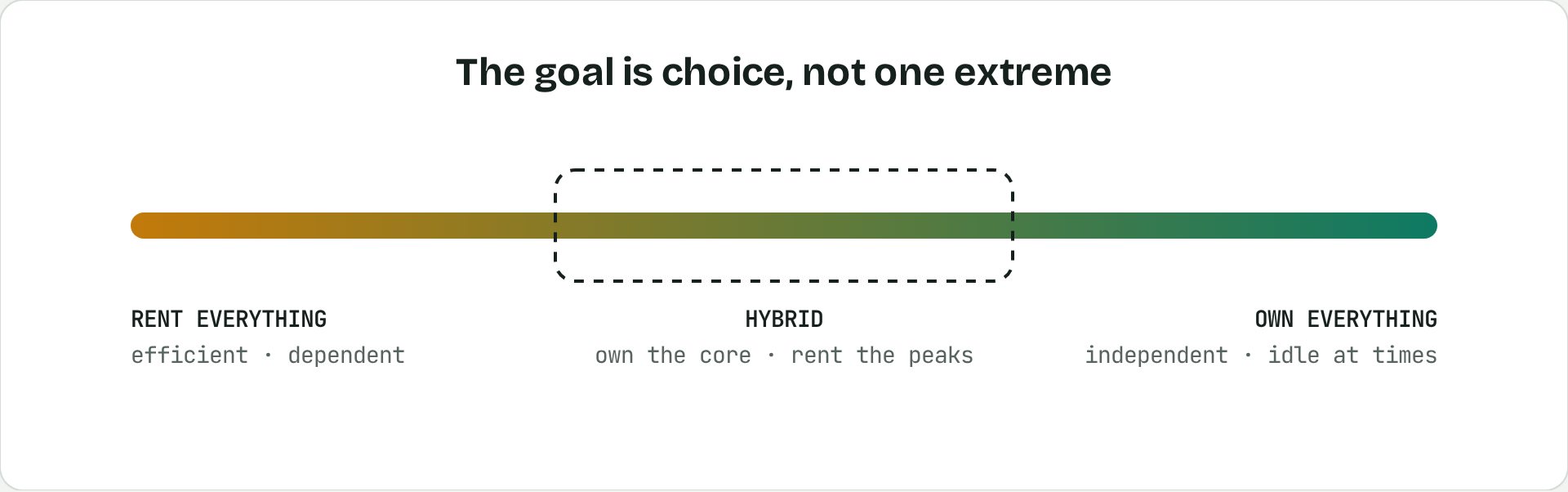
- The practical answer is hybrid. Own the core workloads that touch sensitive data, and rent frontier models for the peaks.
Altman has a point
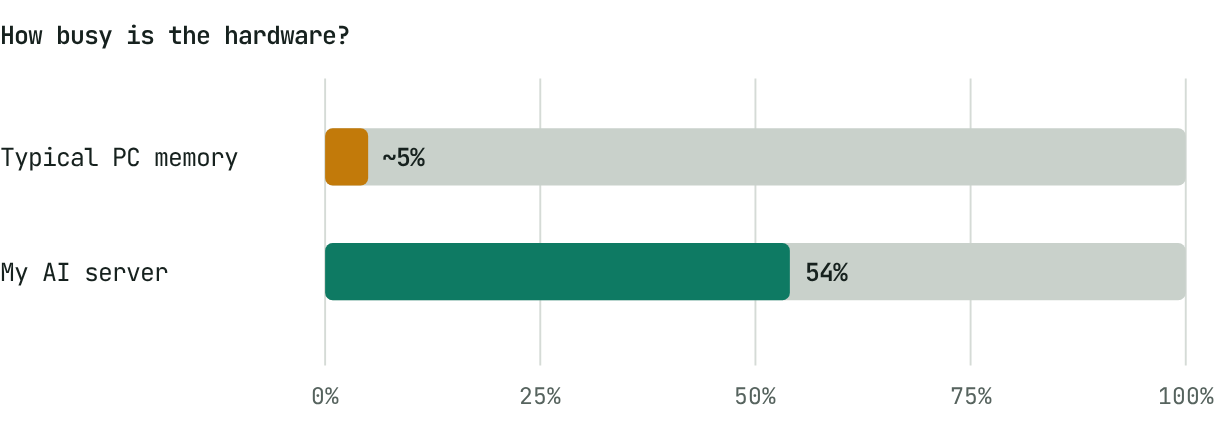
On a recent episode of the Cheeky Pint podcast, Sam Altman called it “quite terrible” that the memory in people’s PCs sits unused about 95% of the time. His argument is simple. Chips and memory are scarce. Spreading them across millions of personal machines that mostly sit idle is wasteful. Pool them in data centers and you can keep them busy.
He has said similar things about the AI industry as a whole. Earlier this year he told CNBC that worries about AI spending are among the fairest criticisms of the industry, and admitted “there’s a ton of waste.”
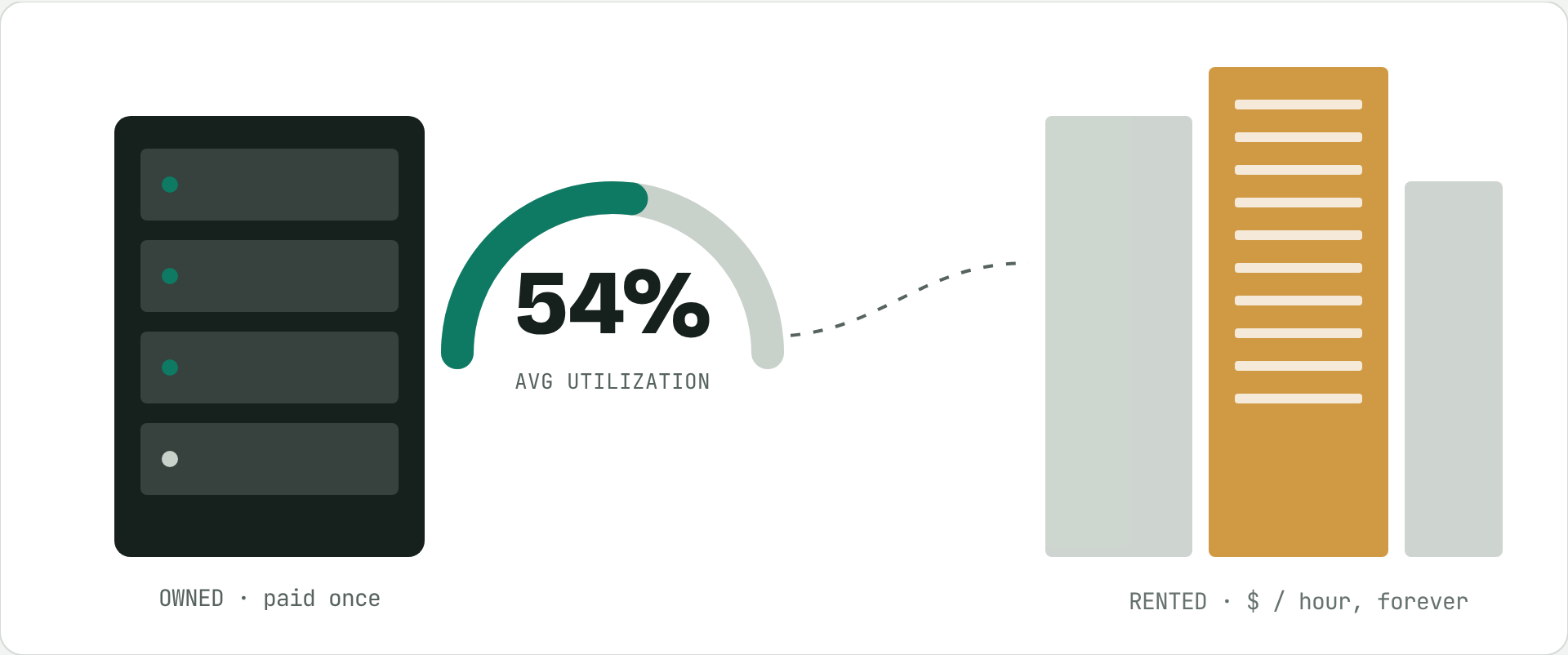
I don’t want to wave that away. We run our own AI infrastructure, and when I checked the numbers, it averages about 54% capacity. Nearly half the time, hardware we paid for is doing nothing.
But here’s my concern
Follow the efficiency argument all the way and you end up somewhere uncomfortable. If idle hardware at the edge is “waste,” the efficient answer is for nobody to own much of anything. A handful of companies run the machines at 90% utilization, and everyone else rents time on them.
Are we moving toward a future where a handful of billionaires own all the computing power, and the rest of us rent access to it?
That future is efficient on a spreadsheet. It also concentrates something that’s turning into basic infrastructure, like electricity or roads, in very few hands. Those hands set the prices, the usage policies, the content rules, and which models you’re allowed to run.
Utilization measures how hard a machine works. It says nothing about who controls it.
What 46% idle actually buys us
When I look at the unused half of our server, I don’t see pure waste. I see what we’re paying for.
When you own it
- Your data and your clients’ data never leave your network.
- No surprise price changes or rate limits.
- You pick the models and keep the versions that work.
- It keeps running if a vendor changes terms, has an outage, or shuts down a product.
- Spare capacity means burst jobs run right away, with no queue.
When you rent it
- Higher utilization, but the savings go to the provider first.
- Costs grow with every token, every month, forever.
- Models get swapped or retired on someone else’s schedule.
- Usage policies can change what you’re allowed to build.
- Your workflows depend on a company you don’t control.
Idle capacity is the price of independence. A fire extinguisher is idle 99.9% of the time, and nobody calls it waste. A spare tire, a backup generator and a savings account all sit “underutilized” on purpose.
This isn’t anti-cloud
We use cloud models every day. Frontier models do things no private server can match yet, and renting them for those jobs makes sense. Efficiency matters too. If a server is idle half the time, the honest response is to put that spare capacity to work, through batch jobs, scheduled agents, or sharing it with people you trust. Giving up ownership isn’t the only fix.
What worries me is a world where renting is the only option. Local models keep getting better and cheaper to run. Tools like Ollama, LM Studio and llama.cpp make it practical to run a capable model on hardware you own. That choice is worth protecting.
The future should be about choice
Efficiency is important. So are ownership, independence and control. An AI future built only for maximum utilization would quietly turn computing from something we own into something we’re allowed to use.
I’d rather accept some idle hardware and keep the option to run our own models on our own terms. For small businesses, researchers and anyone who handles sensitive data, that option may matter more than a few points of utilization.
Would you rather own underutilized technology or rent everything forever? I’d like to hear where you land, and why. Is your AI stack mostly owned, mostly rented, or a mix?
Sources
- Tech Insider: Altman on PC RAM sitting idle (Cheeky Pint, 2026)
- Crypto Briefing: Sam Altman says local AI inference wastes scarce memory
- Digit: Altman admits AI spending concerns are valid

CRM & ERP Enterprise Technology Expert and Entrepreneurial Executive with 20+ years of leading CRM, ERP, Customer Experience, and Block-chain initiatives and projects across internal and customer facing technologies. Proven success in closing large deals in Pre Sales customer facing engagements and deploying enterprise wide CRM & Customer Experience solutions internationally and domestically.