
Over the past twelve months, the industry built an entire payments and checkout stack for AI agents: OpenAI and Stripe’s Agentic Commerce Protocol, Google’s Universal Commerce Protocol, and Google’s Agent Payments Protocol, now handed to the FIDO Alliance. Every one of those standards was designed around a consumer buying a pair of leggings. Almost none of it models contract pricing, approval authority, purchase orders, or net terms. And yet Forrester expects twenty percent of B2B sellers to be pulled into agent-led quote negotiations this year anyway. If you sell B2B, the exposure isn’t your checkout page. It’s your CRM, your CPQ, and your ERP — and whether an agent on the other side can read them, trust them, and push on them faster than your rep can respond.
Key Takeaways
- Forrester predicts 20% of B2B sellers will be forced into agent-led quote negotiations in 2026, driven by the 61% of purchase influencers whose organizations use or plan to use a private generative AI engine to support purchasing.
- The three major agentic commerce standards — ACP (OpenAI/Stripe), UCP (Google), and AP2 (now FIDO Alliance) — are retail-first. None of them carries a standard representation of customer-specific contract pricing, entitlements, or who is authorized to commit a company to a purchase.
- The B2B capability that actually shipped lives inside the CRM: Salesforce made its Agentforce Commerce Buyer Agent generally available on June 24, 2026, handling reorders and round-trip quoting against contract pricing over SMS and WhatsApp.
- Your real 2026 work is three layers deep: be legible to answer engines, be queryable via MCP against a clean system of record, and be governed — with price floors and approval thresholds enforced in the platform, not in a rep’s judgment.
- Forrester also expects B2B companies to lose more than $10 billion in 2026 from ungoverned generative AI use. Speed without guardrails is the expensive failure mode here.
What Actually Shipped — And What It Was Built For
It is worth being precise about the timeline, because vendor marketing has blurred it badly.
September 29, 2025 — the Agentic Commerce Protocol (ACP). Stripe and OpenAI released ACP as an open standard alongside Instant Checkout in ChatGPT. It is published under Apache 2.0 at agenticcommerce.dev and has three parts: a product feed spec, a checkout spec, and a delegated payment mechanism. The payment primitive is the Shared Payment Token — a credential scoped to a specific merchant and a specific cart total, so ChatGPT can initiate a payment without ever holding the buyer’s card. Critically, the merchant stays merchant of record: they accept or decline the order, charge the payment method, calculate and remit sales tax, and own fulfillment and returns. US-based Etsy merchants went live first, with Shopify’s merchant base following.
January 11, 2026 — the Universal Commerce Protocol (UCP). Google announced UCP at NRF, co-developed with Shopify, Etsy, Wayfair, Target, and Walmart, and endorsed by 20+ more including Adyen, American Express, Best Buy, Macy’s, Mastercard, Stripe, The Home Depot, and Visa. It covers the full journey — discovery, checkout on Search and the Gemini app, a Business Agent that lets shoppers chat with a brand directly in Search, and a Direct Offers pilot for exclusive discounts in AI Mode. On October 6, 2026, Google began rolling out a UCP integration hub inside Merchant Center to US merchants, letting them pick which capabilities to support — cart transfer, native checkout on Google, identity linking — rather than taking one bundled checkout experience. Canada and Australia are expected in early 2027.
April 28, 2026 — AP2 goes to FIDO. Google donated the Agent Payments Protocol to the FIDO Alliance, alongside AP2 v0.2, which adds “Human Not Present” payments — agents executing transactions autonomously against pre-authorized instructions. Google also co-developed Verifiable Intent with Mastercard, a tamper-proof log of what a user actually authorized an agent to do. That audit-trail question is the one that matters most for B2B, and it is the one that is furthest from settled.
| Standard | Behind it | What it solves | Relevance to mid-market B2B today |
|---|---|---|---|
| ACP | OpenAI + Stripe, Apache 2.0 | Product feed, agent checkout, Shared Payment Token | Indirect. Matters if you sell catalog SKUs at list price or run a D2C arm. |
| UCP | Google + Shopify, Etsy, Wayfair, Target, Walmart | Discovery through post-purchase across Search, Gemini, ads | Indirect, but the Merchant Center hub lowers the bar for any US merchant to test it. |
| AP2 | Google → FIDO Alliance, with Mastercard | Payment authorization and verifiable intent for autonomous agents | Watch closely. Verifiable intent is the missing piece for agent purchase authority. |
| MCP | Anthropic, broad vendor adoption | Governed, permissioned agent access to your systems of record | Direct and immediate. This is the one your CRM and ERP already speak. |
Why None of That Solves a B2B Transaction
Run a normal B2B order through the retail protocols and it falls apart within three fields. The correct price depends on the account, the contract, the quantity break, the currency, the ship-to location, the effective date, and whether someone approved an exception last quarter. The order needs a PO number. It ships on net-30 against a credit limit. The buyer’s entitlements may restrict them to a customer-specific catalog. There are minimum order quantities, lead times, tax-exemption certificates, and a multi-entity structure deciding which legal entity invoices.
None of that has a standard representation in ACP or UCP. And the deeper gap is authority: there is still no widely adopted, machine-verifiable credential proving that a given agent is empowered to commit a given company to a given amount. Until that exists, an unauthenticated external agent transacting autonomously against your contract pricing on credit terms is not a thing any serious finance team should allow.
So the protocols are not the threat. The buyer’s behavior is. Procurement teams are not waiting for a standard — they are pointing a private GPT at your spec sheets, your published pricing, your competitors’ pages, and last year’s quote, and arriving at your rep with a position already formed.
Where It Actually Touches You: Three Layers
1. Discovery — you are being summarized before you are contacted
The first agentic interaction in a B2B deal is not a checkout. It is an answer engine deciding whether to mention you. HubSpot made this measurable at its Spring 2026 Spotlight on April 14, launching HubSpot AEO, built on its acquisition of XFunnel. It tracks four things across ChatGPT, Gemini, and Perplexity: mentions, citations, share of voice versus competitors, and AI referral traffic with conversion rates. It runs $50/month standalone, or comes bundled in Marketing Hub Pro and above, where prompt suggestions draw on your CRM data. The free AI Search Grader gives you a one-shot snapshot. Coverage of the launch framed it as HubSpot treating answer engines as a first-class acquisition channel — which is the right read.
If you sell technical products, the uncomfortable detail is that agents cite structured specs, compatibility tables, units of measure, and lead times far more readily than they cite marketing copy. Most mid-market distributors and manufacturers have that data trapped in PDF line cards and inconsistent supplier feeds.
2. Quoting — the counteroffer arrives faster than your approval chain
This is the Forrester prediction with teeth. In its 2026 B2B predictions (published October 28, 2025), Forrester states that 61% of purchase influencers say their organization has or will use a private genAI engine to support purchasing, compelling at least one in five B2B sellers to respond to AI-powered buyer agents with dynamically delivered counteroffers via seller-controlled agents.
Salesforce is the vendor that has shipped the most concrete answer. On June 24, 2026, it made three agents generally available — Shopper, Buyer, and Merchant. The B2B Buyer Agent takes reorders, quotes, and account questions over SMS and WhatsApp with no portal login: a contractor texts “need 40 cases of the 16-oz fasteners, same as the March order,” confirms the SKU from a product image, sees current contract pricing, and places the order. It adds Multi-Cart and Round-Trip Quoting for cart-to-quote-to-cart negotiation. The reason this works where open protocols don’t is architectural: the buyer is authenticated, and the commercial logic never leaves the platform. Salesforce layered external reach on top — ChatGPT availability in July 2026 via ACP, Google AI Mode and Gemini over the summer — after expanding its OpenAI partnership in October 2025.
3. The system of record becomes an endpoint
Whatever happens with checkout standards, MCP is already how agents reach your data. Zoho announced its MCP server on July 17, 2025, opening its action library across CRM, Books, Desk, and a dozen-plus other apps to third-party agents under permission controls. Oracle NetSuite exposes ERP records, saved searches, and SuiteScript-backed tools to external models through its MCP-based AI Connector Service. The practical consequence: the quality of your product master, price book, and inventory data is no longer an internal hygiene issue. It is the API contract an outside agent will judge you on.
The Governance Gap Nobody Budgeted For
Forrester’s headline 2026 prediction is that B2B companies will lose more than $10 billion through ungoverned use of generative AI — via declining stock prices, legal settlements, and fines. In a quoting context, “ungoverned” has a very specific meaning: an agent that can issue a price without a floor, extend terms without a credit check, or confirm a lead time it cannot source.
Before any agent touches a quote, four controls need to exist in the platform rather than in someone’s head: a hard price floor per product family, an approval threshold that routes discounts above a set percentage to a human, an immutable audit log tying every agent-issued number to the authorization behind it, and a scoped service identity for the agent so its actions are distinguishable from a rep’s in your logs.
And resist the urge to automate the whole funnel. Forrester also found that 19% of buyers using these AI applications feel less confident in their purchasing decisions because of inaccurate or unreliable information — and that the 2025 pattern, where 30% of buyers rated genAI tools as meaningful at the final commit stage versus just 17% for interactions with product experts, is now reversing as buyers seek deeper validation. The agent compresses the middle of the funnel. It raises the value of a credible human at the end of it.
What to Do in the Next 90 Days
- Run the free AI Search Grader and one manual audit. Ask ChatGPT, Gemini, and Perplexity the five questions your best prospects ask. Record what they say about you, what they say about your three closest competitors, and which sources they cite.
- Fix the product master before anything else. Specs, units of measure, compatibility, lead times, and identifiers as structured fields in your CRM or ERP — not as a PDF line card. This single step feeds discovery, quoting, and MCP access simultaneously.
- Write down your price floors and discount approval matrix. If they only exist as tribal knowledge, no agent can be trusted with them and neither can a new rep.
- Enforce those rules in CPQ, not in policy. Salesforce Revenue Cloud, HubSpot quote approvals, Zoho CRM price books and blueprints, NetSuite approval routing — each has a native mechanism. Use it.
- Stand up MCP access read-only first. Let agents query inventory, pricing, and order history before you let them write anything. Scope credentials per agent and log every call.
- Instrument an agent-sourced pipeline field. Add a lead-source value for AI-referred traffic and a flag on opportunities where a buyer-side agent was involved. In twelve months, this will be the only data that tells you whether any of this mattered.
- Pilot one agent-facing use case that does not involve price. Reorder of previously purchased SKUs at existing contract pricing is the safest starting point — no new negotiation, full entitlement check, immediate measurable value.
CRM Experts Online’s Perspective
We implement CRM and ERP for small and mid-market companies, and we will say the quiet part plainly: most of the firms asking us about agentic commerce right now cannot produce a clean, current, machine-readable price book. That is the actual blocker. The protocols will converge, the vendors will ship connectors, and none of it will help a distributor whose contract pricing lives in three spreadsheets and a sales manager’s memory.
So our sequencing is deliberately unglamorous. Data model first — product master, price books, entitlements, account hierarchy. Commercial rules second, encoded in CPQ with real floors and real approval routing. Agent access third, read-only, scoped, logged. Only then do we talk about exposing anything to an external channel.
We also push back on one framing we hear constantly: “we need to be in ChatGPT.” For most B2B sellers, that is the least valuable move available this year. The high-value move is making sure that when a procurement analyst’s private GPT summarizes your capability against two competitors, it has accurate, citable, structured information to work from — and that when the resulting counteroffer hits your rep, your system can price it correctly in minutes instead of days. That is a CRM and data project wearing an AI costume, and it pays off whether or not any of these protocols wins.
FAQ
Do I need to implement ACP or UCP if I sell B2B? Almost certainly not this year, unless you also run a D2C or catalog business at list pricing. Neither protocol models contract pricing, approval authority, POs, or net terms. Spend the effort on your data model and CPQ instead.
What is the difference between ACP, UCP, and AP2? ACP (OpenAI and Stripe) standardizes product feeds and agent checkout with a merchant-scoped payment token. UCP (Google and partners) covers the broader journey across Search, Gemini, and ads, with onboarding through Merchant Center. AP2, now governed by the FIDO Alliance, handles payment authorization and the verifiable record of what a user actually approved.
Can an AI agent legally commit my customer to a purchase order? That is the unresolved question. There is no widely adopted machine-verifiable credential proving an agent’s purchasing authority, which is why Google and Mastercard’s Verifiable Intent work matters. Until it settles, require an authenticated buyer identity on your side of any agent-driven order.
Is agent-led quote negotiation really happening in 2026? Forrester predicts 20% of B2B sellers will face it this year, driven by 61% of purchase influencers whose organizations use or plan to use private genAI engines for purchasing. It looks less like a bot-versus-bot haggle and more like a buyer arriving with an AI-generated counterposition your rep has to answer quickly.
What if we run Zoho or HubSpot rather than Salesforce? You still get the two layers that matter. HubSpot ships AEO for answer-engine visibility at $50/month standalone or inside Marketing Hub Pro+. Zoho’s MCP server exposes CRM, Books, Desk, and other apps to agents under permission controls. The Salesforce Buyer Agent is further ahead on packaged B2B commerce specifically, but the data and governance work is identical on every platform.
How do I stop an AI agent from giving away margin? Enforce floors in the system, not the process. Hard price floors by product family, approval routing above a discount threshold, a scoped service identity per agent, and an audit log that ties every issued number to the authorization behind it.
Where does our ERP fit into this? It becomes the truth source agents query for inventory, lead times, credit limits, and order history. NetSuite’s MCP-based AI Connector Service is the mechanism; the harder work is making sure the records behind it are accurate enough to answer with.
Should we reduce sales headcount because of this? We would not. Forrester found 19% of buyers using AI tools feel less confident in their decisions, and the 2025 preference for genAI over product experts at the commit stage is already reversing. Agents compress research and routine reorders; they increase the value of credible human expertise at close.
Conclusion
The agentic commerce standards race is real, well-funded, and moving fast — and it was built for a shopping cart, not a purchase order. For B2B sellers, the practical consequence in 2026 is not that agents will check out on your site. It is that agents are already researching you, summarizing you, and arming your buyers with positions before a human conversation starts, and your ability to respond depends entirely on whether your product data, price books, and approval rules are clean enough to be read by a machine and defended in a negotiation.
That is a CRM and ERP implementation problem, and it is one you can start on this quarter. If you want a clear-eyed assessment of where your product master, pricing logic, and quote governance actually stand — and a sequenced plan to get agent-ready without exposing your margin — schedule a consultation with CRM Experts Online. We work across Salesforce, HubSpot, Zoho, NetSuite, SugarCRM, and SuiteCRM, and we would rather fix your data foundation than sell you an agent that quotes from it badly.
Further Reading
- Forrester’s 2026 B2B Marketing, Sales, And Product Predictions
- Stripe: Instant Checkout in ChatGPT and the Agentic Commerce Protocol
- Agentic Commerce Protocol — official specification site
- Google: New tech and tools for retailers in an agentic shopping era (UCP launch)
- Search Engine Land: Google rolls out Merchant Center UCP integration hub in the U.S.
- Google donates the Agent Payments Protocol to the FIDO Alliance
- Salesforce: Agentforce Commerce general availability (June 24, 2026)
- Salesforce and OpenAI partnership expansion
- HubSpot AEO: show up in AI search
- TechTarget: HubSpot builds answer engine optimization into its platform
- Zoho launches Zia LLM, prebuilt agents, Agent Studio, and an MCP server
- Understanding MCP in the context of NetSuite AI
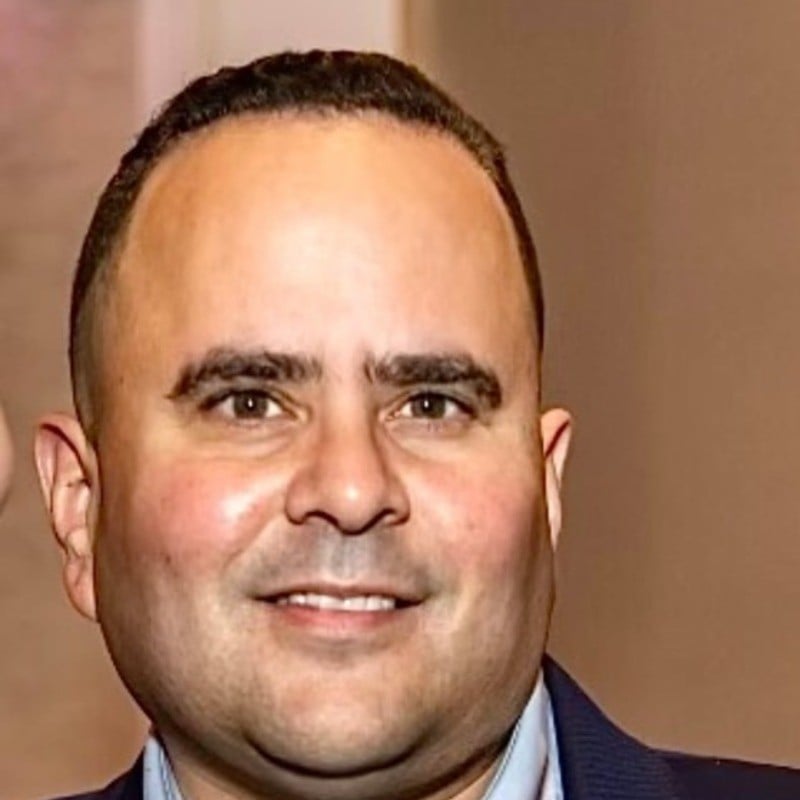
CRM & ERP Enterprise Technology Expert and Entrepreneurial Executive with 20+ years of leading CRM, ERP, Customer Experience, and Block-chain initiatives and projects across internal and customer facing technologies. Proven success in closing large deals in Pre Sales customer facing engagements and deploying enterprise wide CRM & Customer Experience solutions internationally and domestically.