
CRM systems only succeed when teams use them effectively, but adoption is often a major hurdle. Issues like employee resistance, poor data quality, complex interfaces, and inadequate training lead to low engagement and wasted investments. AI can solve these problems by automating repetitive tasks, improving data accuracy, simplifying user interfaces, and personalizing training.
Key Solutions AI Offers:
- Reduces Resistance: Automates tasks like data entry and offers personalized recommendations.
- Boosts Data Accuracy: Flags errors, removes duplicates, and updates outdated information.
- Simplifies Interfaces: Customizes dashboards for individual roles and highlights relevant features.
- Improves Training: Creates role-specific learning paths based on user behavior and needs.
- Tracks Engagement: Monitors user activity, flags issues, and sends reminders to boost participation.
Quick Result Examples:
- Avison Young: CRM adoption improved from 23% to 90% in 4 months.
- IBM: Lead conversion increased by 35%, and manual data entry dropped by 20%.
- Experian: Training time reduced from 6 hours to 40 minutes.
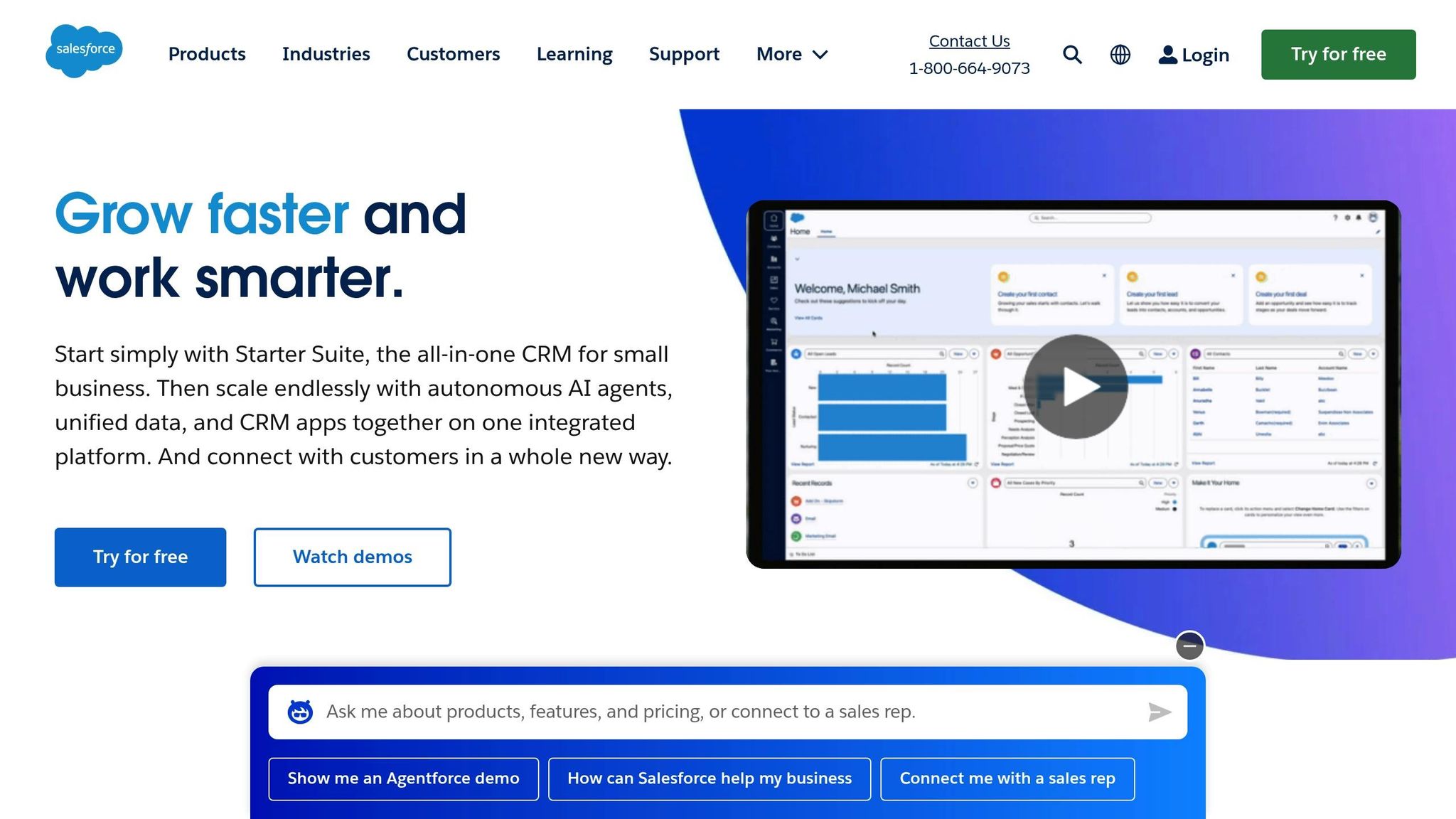
Dominate Salesforce with AI: User Adoption Made Easy
How AI Fixes CRM User Adoption Problems
AI tackles common CRM adoption issues like resistance to change, data inaccuracies, overly complex systems, and inadequate training. By simplifying processes and making CRM tools more intuitive, AI helps organizations overcome these challenges and improve user adoption.
Let’s dive into how AI addresses these hurdles, starting with employee resistance.
Reducing Employee Resistance with Predictive AI
Resistance to new systems often stems from fear of change and uncertainty about how it will impact daily workflows. AI eases these concerns by analyzing user behavior and offering personalized recommendations that align with individual work styles. For instance, a sales representative who spends most of their time on calls might benefit from automated call logging rather than being bogged down by advanced reporting features.
"The biggest challenge lies in managing change and people, rather than the technology itself." – Jonas Albertson, Managing Director of Atlas Copco [2]
Framing AI as a tool that simplifies work – rather than replacing roles – can help employees see its value. Automating repetitive tasks like data entry not only saves time but also reduces frustration. Open communication and involving employees in the adoption process further encourage buy-in.
But AI doesn’t stop at reducing resistance. It also improves data accuracy, a common pain point in CRM systems.
Fixing Data Accuracy with AI Automation
Poor data quality can erode trust in a CRM system, leading users to disengage. AI-powered tools address this by catching errors in real time, flagging incorrect entries, and suggesting corrections. These automated processes can reduce manual data cleaning efforts by up to 50% and cut data entry errors by 40% [3].
For example, a global retail company automated its customer data cleansing process, which significantly improved CRM accuracy and cut entry errors by 40% [3]. Similarly, Natural Language Processing (NLP) can enhance automation by understanding context and intent. One fast-casual restaurant chain used NLP to validate menu pricing across platforms, boosting daily sales report accuracy by 50% [3]. Real-time monitoring also detects inconsistencies, duplicates, and outdated information, helping a logistics company reduce delivery delays by 20% [3].
Simplifying User Interfaces with AI Design
Complex CRM interfaces can overwhelm users and discourage adoption. AI simplifies this by customizing dashboards and workflows to fit individual roles and preferences. Instead of showing every feature to every user, the system highlights what’s most relevant. For example, a marketing manager might see campaign metrics, while a sales rep gets pipeline views.
AI also adapts interfaces based on usage. Frequently used tools are repositioned for easier access, and smart suggestions – like auto-filling a company name based on an email domain – make tasks quicker and more intuitive. This tailored approach ensures that CRM systems feel user-friendly and straightforward.
Closing Training Gaps with AI-Powered Learning
Traditional CRM training often fails to address specific user challenges. AI changes this by creating personalized training modules based on real user data, such as support tickets that highlight common issues.
By tailoring learning paths to different roles, AI ensures that each team member gets relevant training. For example, when a marketing team transitioned to HubSpot, AI identified the distinct needs of operations staff, content creators, campaign managers, and analysts, providing role-specific guidance [5].
AI also tracks usage patterns to identify underutilized features, suggesting refresher courses or introducing new tools when necessary. As Choi Chow, Product Marketing Manager at Salesforce, puts it:
"AI isn’t a ‘set it and forget it’ tool. It’s a journey where your team can grow, adapt, and improve." [4]
Increasing Engagement with User Analytics
Low engagement often goes unnoticed until it becomes a major issue. AI-powered analytics solve this by tracking login frequency, feature usage, and task completion. These insights help build detailed engagement profiles for each user. If activity drops or key features are underused, the system can send personalized reminders or recommend targeted training resources.
AI also identifies patterns, pinpointing where users lose interest or encounter difficulties. It can gamify adoption by setting personalized goals and offering rewards, which keeps users motivated. Predictive analytics take this a step further by flagging early warning signs like decreased logins or incomplete data entries, enabling proactive intervention.
AI in CRM Adoption: Practical Examples
Let’s dive into some real-world examples that highlight the tangible benefits of AI in driving CRM adoption. Across industries, companies have seen measurable improvements in user engagement, training efficiency, and overall system adoption by integrating AI-powered tools into their CRM strategies.
Here’s a comparison of how traditional CRM adoption methods stack up against AI-powered approaches:
Manual vs. AI-Powered CRM Adoption Methods
| Aspect | Traditional Methods | AI-Powered Methods | Result |
|---|---|---|---|
| User Adoption Rate | 23% (Avison Young before)[6] | 90% (Avison Young after)[6] | 291% increase |
| Training Time | 6 hours (Experian before)[7] | 40 minutes (Experian after)[7] | 89% reduction |
| Support Tickets | Baseline | 15% reduction (Sophos)[7] | 12,000 fewer tickets |
| Lead Conversion | Baseline | 35% increase (IBM)[8] | Substantial improvement |
| Manual Data Entry | High volume | 20% reduction (IBM)[8] | Significant time savings |
These numbers tell a powerful story. For instance, Avison Young saw their user adoption rate skyrocket from 23% to 90% in just four months after implementing AI solutions. IBM reported a 35% boost in lead conversion rates and reduced manual data entry by 20% within a year. Experian streamlined onboarding processes, cutting training time from six hours to just 40 minutes using AI-guided tools. Coca-Cola United also benefited by automating customer support, slashing manual case handling by 60%.[8]
"HubSpot is easy to use, easy to train people on, and easy to customize. It empowers people to do what they do best."
- Phoebe Scott, Global Director, CRM, Avison Young[6]
The shift is striking. Traditional methods often rely on lengthy training sessions and hope users adapt over time. In contrast, AI-powered approaches provide active, intuitive support at every stage, making the adoption process smoother and more effective. These examples clearly show how AI can transform CRM adoption challenges into measurable successes.
sbb-itb-f02ae4e
Setting Up AI-Driven CRM Adoption Solutions
The numbers don’t lie: 97% of companies feel a pressing need to adopt AI-powered technologies, yet only 14% are prepared to implement them effectively [9]. Tackling the challenges of user adoption begins with a thorough evaluation of your organization’s readiness for AI.
Checking Your Organization’s AI Readiness
Before jumping into AI-powered CRM tools, it’s crucial to assess whether your organization is ready. While 80% of business leaders agree that AI adoption is important, only 60% believe their company has a clear plan to make it happen [10].
Start by securing leadership buy-in and auditing your data. AI tools rely heavily on accurate and complete data, and poor-quality data can derail even the best systems. Addressing data issues early ensures smoother implementation.
Next, review your technical infrastructure and team capabilities. Many businesses discover that their current systems can’t handle the demands of advanced AI tools, leading to slow performance and frustrated users. It’s also important to identify gaps in skills, particularly in data analysis and machine learning, that could hinder adoption.
Don’t overlook the human side of the equation. Organizational culture plays a huge role in AI readiness. Gauge your team’s openness to new technology and address any concerns about job security or skill requirements. Being transparent about how AI will complement, not replace, human roles can help ease these anxieties.
Financial planning is another critical step. Beyond the initial software costs, factor in expenses for hardware upgrades, software licenses, training programs, and consulting services. A well-thought-out budget that includes ongoing costs can prevent incomplete or failed implementations.
Finally, consider partnering with AI specialists. Their expertise can help you navigate technical challenges and avoid common mistakes, accelerating your journey toward successful adoption.
Once your organization is ready, the next step is selecting the right AI-powered CRM tools to encourage adoption and drive results.
Key Features to Look for in AI-Powered CRM Tools
Customer experience is the top priority for 57% of companies using AI [13], and selecting the right features can make or break adoption success. When implemented thoughtfully, AI tools can improve response times by 50% for both customers and partners [13].
Here are the features to prioritize:
- Predictive Analytics: Tools that forecast customer behavior, identify churn risks, and predict future purchases can shift your approach from reactive to proactive, building stronger relationships.
- Automated Data Capture: Reducing manual tasks like logging emails, calls, and meetings can minimize resistance to adoption by saving time and effort.
- Enhanced Lead Scoring: AI can rank prospects based on their likelihood to convert, helping sales teams focus on high-value opportunities and making the CRM feel like an indispensable assistant.
- Workflow Automation: Look for tools that can handle repetitive tasks like follow-up emails, meeting scheduling, and contact updates without disrupting your team’s workflows.
- Sentiment Analysis: AI that evaluates customer communications for positive or negative sentiment allows teams to address concerns before they escalate, improving satisfaction.
- Generative AI for Content Creation: Features that generate personalized emails, social media posts, and marketing materials can save time while maintaining consistent messaging across channels [14].
- Communication Summarization: Tools that extract key insights from call logs, emails, and meetings offer concise updates, keeping users informed without overwhelming them [14].
- AI-Powered Customer Support: Chatbots and virtual assistants can handle routine inquiries instantly, reducing the load on support teams and ensuring timely customer assistance [14].
When evaluating platforms, user reviews can provide valuable insights. For instance, Scratchpad boasts a G2 rating of 4.8/5 from over 1,475 reviews, while Salesforce holds a G2 rating of approximately 4.4/5 from more than 20,000 reviews [11].
To ensure success, focus on areas where AI can deliver clear value without disrupting critical operations. This approach not only encourages adoption but also builds confidence in the technology’s potential.
Conclusion: Changing CRM Adoption with AI
AI is revolutionizing how businesses use CRM systems by turning manual processes into automated, predictive workflows that save time and improve decision-making.
Key Takeaways
Businesses integrating AI into their CRM systems are seeing impressive results: 16% higher customer retention, 17% more conversions, and a 21% boost in sales force efficiency [18]. These stats highlight how AI reshapes the way teams interact with customer data.
AI elevates CRM from being just a static database to an intelligent system that automates repetitive tasks, improves customer interactions, and delivers real-time insights [17]. Think about how much time manual data entry, follow-ups, and reporting used to take – AI now handles these tasks while also providing better forecasting and actionable recommendations [17].
The financial gains are equally compelling. Companies report an $8.71 return for every dollar spent on AI-powered CRM and experience 50% faster response times. These improvements are crucial, especially when nearly half of CRM projects underperform due to low user adoption [1] [13] [15]. By addressing the barriers to adoption – like reducing manual work and improving data accuracy – AI makes CRM systems more user-friendly and valuable, encouraging long-term engagement.
Next Steps for Businesses
Overcoming CRM adoption hurdles requires both strategic planning and smart technology. Start by pinpointing specific challenges in your CRM process that AI can solve. Focus on areas where you can achieve quick, measurable wins [19]. With 87% of executives expecting job roles to be enhanced by generative AI [12], it’s essential to position AI as a tool that complements human efforts rather than replacing them.
"You need to know what you want to achieve. It seems simple when I say that, but most of the time the company wants to create AI, but they do not know what they want to achieve or what they want to deliver at the end." – PD11, CEO of an AI solution provider [2]
Begin by evaluating your current CRM setup and ensuring your data is accurate – AI depends on clean, reliable inputs. Train your team on how AI simplifies their work and set clear metrics to monitor its performance over time [20].
For expert guidance, companies like CRM Experts Online specialize in AI-powered CRM solutions. They provide tailored enterprise systems, implementation services, and ongoing support across industries. Their expertise in sales automation, AI integration, and customer experience optimization can help you navigate complex technical challenges and avoid common pitfalls.
The potential for growth with AI-powered CRM is enormous, but success hinges on careful planning and execution. Businesses that align these tools with their overall strategy will gain a competitive edge over those sticking to outdated, one-size-fits-all solutions [16]. The real question is: will your business be among the first to seize these opportunities?
FAQs
How does AI help reduce employee resistance to adopting CRM systems?
AI plays a key role in easing employee resistance to CRM adoption by tackling common hurdles and simplifying the entire process. One way it achieves this is through AI-powered personalized training programs. These programs let employees learn at their own speed, removing the pressure of keeping up with a one-size-fits-all training approach. This flexibility not only reduces stress but also boosts confidence, helping employees feel more equipped to navigate the new system.
On top of that, AI takes over repetitive tasks and streamlines workflows, demonstrating how the technology enhances their roles rather than threatening them. By lightening workloads and improving efficiency, AI creates a more positive view of the CRM system, encouraging employees to embrace it with less hesitation.
What features should I prioritize in an AI-powered CRM to boost user adoption?
To make sure your team embraces an AI-powered CRM, start by choosing one with a clean, intuitive interface. A system that’s easy to navigate will help your team get up to speed quickly, cutting down on the time spent learning new tools.
Next, focus on CRMs with automation features like automated data entry, task reminders, and follow-ups. These can save hours of manual work and keep productivity on track.
It’s also important to select a CRM that allows for customization so you can tailor it to fit your workflows and processes. Additionally, ensure it offers integration capabilities to connect seamlessly with the tools you already use, keeping everything running smoothly.
Lastly, don’t underestimate the value of training resources and ongoing support. A strong onboarding experience and access to help when needed can make all the difference in keeping your team engaged and confident in using the platform.
How can businesses evaluate if they’re ready to adopt AI-powered CRM solutions?
To figure out if AI-powered CRM solutions are the right move, businesses should begin by taking a close look at their current CRM processes. This means evaluating workflows, spotting inefficiencies, and ensuring that their data systems are solid and well-structured. Without a strong foundation, even the best AI tools won’t deliver their full potential.
It’s also crucial to bring together stakeholders from different departments to agree on goals and outline specific objectives for integrating AI. At the same time, organizations need to evaluate whether they have the right technology, expertise, and resources to support this shift. Laying the groundwork properly can help make the transition smoother and unlock the full potential of AI in managing customer relationships.
Related Blog Posts
- 7 Essential AI Features Every Modern CRM Must Have
- AI in CRM: Demand Forecasting Basics
- How AI Improves CRM Resource Utilization
- How AI Improves CRM Workflow Efficiency

CRM & ERP Enterprise Technology Expert and Entrepreneurial Executive with 20+ years of leading CRM, ERP, Customer Experience, and Block-chain initiatives and projects across internal and customer facing technologies. Proven success in closing large deals in Pre Sales customer facing engagements and deploying enterprise wide CRM & Customer Experience solutions internationally and domestically.