
In March 2026, Salesforce deleted roughly 170 partner badges and replaced them with 28 competencies. HubSpot raised its partner tier thresholds in July and started charging a $400/month membership fee. Microsoft retired a stack of Dynamics 365 functional-consultant certifications and pointed the holders toward agentic-AI credentials instead. None of this was aimed at you — the buyer — but all of it changed the meaning of the logos on your consultant’s website, and it changed which firms a vendor rep will even mention when you ask for a referral.
Key Takeaways
- Salesforce consolidated four consulting tiers (Base, Ridge, Crest, Summit) into two — Select and Summit — and collapsed ~170 legacy badges into 28 competencies rated Accredited or Expert, with heavy weighting toward Agentforce and Data 360.
- Salesforce now scores partners partly on active consumption rather than seats provisioned, which quietly aligns your implementation partner’s incentives with how much AI capacity you burn.
- HubSpot restricted partner-matching referrals to Gold tier and above as of January 15, 2026, added a $400/month membership fee on July 15, 2026, and raised tier point thresholds substantially (Elite now needs 2,750 sourced / 11,000 total points by January 15, 2027).
- Microsoft retired Dynamics 365 certifications including MB-240, MB-335, and MB-700 in mid-2026, steering consultants toward AB-100 (Agentic AI Business Solutions Architect) and AB-250 (Dynamics 365 Contact Center AI Engineer).
- Zoho’s tiering runs on a 1,000-point value score where 500 points come from revenue — a useful reminder that no vendor tier is a pure measure of implementation skill.
- Practical consequence: a tier badge in 2026 tells you how much revenue a firm sources and how fast it adopted the vendor’s AI roadmap. It does not tell you whether that firm can run your project.
What Actually Changed, Vendor by Vendor
These four programs were rewritten independently, but they moved in the same direction: fewer tiers, fewer credentials, more weight on AI delivery, and more explicit linkage between a partner’s standing and the revenue it drives for the vendor.
Salesforce: 170 Badges Down to 28 Competencies
On March 2, 2026, Salesforce announced a restructuring of its Consulting Track built around what it calls the “agentic enterprise.” Per Salesforce’s own announcement, the program evolves 170 legacy distinctions into 28 core competencies aligned to buying patterns, with increased demand called out specifically for Agentforce and Data 360. Each competency carries one of two recognition levels: Accredited (demonstrated capability) or Expert (scaled delivery excellence). Competencies also replace the old Navigator framework.
Two details matter more to buyers than the tier names. First, partner standing is now measured through CSAT scores, verified project outcomes, and specialization certifications — not just headcount and cert counts. That is a genuine improvement. Second, and less discussed: Salesforce lists active consumption rather than seat provisioning among the measures of success, and is targeting $1 billion in revenue driven through partner incentives spanning lead submissions, pre-sales, and post-sales implementation subsidies.
Andrew Kisslo, SVP of Partner Programs and Strategy, framed it as “anchoring our entire ecosystem to verifiable impact.” Salesforce Ben’s coverage quotes Nick Johnston, SVP of Global Consulting Partners & Partner Sales, more bluntly: “Specialization is the new currency of the agentic era.”
HubSpot: Pay to Play, and Referrals Only Above Gold
HubSpot’s changes are less about badges and more about access. Three dates matter:
- January 15, 2026 — partner-matching eligibility was restricted to Gold tier and above. HubSpot’s Growth Specialists and Customer Success Managers use an AI-powered recommendation engine to route customers to partners, and per HubSpot’s 2026 tiers and benefits page, matching priority weights higher sourced MRR, relevant accreditations, and track record. The same update swapped the retention metric for Elite and Diamond to Gross Revenue Retention and eliminated managed-point minimums.
- July 15, 2026 — a single unified entry path launched with a $400/month membership fee, waived for partners whose own HubSpot subscription is $400/month or more. Tier thresholds went up the same day.
- August 15, 2026 — the legacy Provider program ended; remaining Providers who did not convert were terminated and active commissions ended immediately.
The new thresholds, which partners have until January 15, 2027 to hit, are steep. Points accrue per $100 of MRR: 5 for sourced, 3 for assisted, 1 for managed (doubled in growth markets), and sold points expire a year after close.
| HubSpot Tier | Sourced Points | Total Points | Retention Requirement |
|---|---|---|---|
| Gold | 115 | 345 | — |
| Platinum | 425 | 1,275 | — |
| Diamond | 1,250 | 3,750 | GRR ≥ 75% |
| Elite | 2,750 | 11,000 | GRR ≥ 80% |
Read the first column again. “Sourced” means the partner brought HubSpot the deal. A firm that is superb at fixing broken portals but never sells new licenses cannot reach Gold — and therefore cannot be referred to you by HubSpot. Beginning January 1, 2027, untiered partners must maintain at least one sourced point in a trailing twelve months or face termination from the program entirely.
Microsoft: The Certifications Themselves Got Rewritten
Microsoft went after the credential layer. Between June 30 and August 31, 2026, a slate of Dynamics 365 certifications retired. MB-240 (Field Service Functional Consultant) retired June 30, 2026. MB-335 (Supply Chain Management Functional Consultant Expert) and MB-700 (Finance and Operations Apps Solution Architect Expert) were folded into AB-100, Agentic AI Business Solutions Architect Expert — a credential about designing multi-agent systems across Copilot, Azure AI Foundry, and Dynamics 365. A new associate-level AB-250, Dynamics 365 Contact Center AI Engineer, entered beta in June 2026.
Separately, per MSDynamicsWorld, Dynamics 365 Contact Center and Copilot Studio became eligible workloads for the Business Applications Solutions Partner designation, and the Frontier Badge is evolving into a Frontier Partner specialization designed to help Microsoft field sellers identify partners ready for agentic AI. The signal is unambiguous: the fastest route to Microsoft’s good graces in 2026 is agent work, not finance-and-operations depth.
Zoho: The Honest Scoreboard
Zoho keeps three tiers — Authorized, Advanced, Premium — and is refreshingly transparent about the math. Zoho’s partner tiers page publishes a 1,000-point value score: Revenue is worth up to 500 (400 growth, 100 acquisition), Customer Success up to 200 (retention 100, CSAT 100, with escalations able to subtract 100), Market Readiness up to 200 (certifications 100, projects 50, case studies 50), and Zoho Engagement up to 100 (practice 25, campaigns and branding 75). Advanced requires more than 400 points; Premium requires more than 600.
Do the arithmetic. A partner can hit Premium on revenue and marketing alone with mediocre delivery evidence. Zoho isn’t hiding that — it publishes the weights. But it makes the general point cleanly: every vendor tier is a composite of commercial contribution and delivery quality, and commercial contribution usually weighs more.
Why This Matters When You’re Hiring
Three practical consequences follow from these changes.
1. The badge on the website may not exist anymore. Third-party “Top 10 Salesforce Partners” listicles published in 2026 still reference Crest and Ridge, tiers that no longer exist. Some partner sites do too. That is a cheap credibility check: if a firm is still advertising a retired tier six months after the program changed, it isn’t paying attention to the ecosystem it claims to specialize in.
2. The directory is a filter, not a census. HubSpot’s matching engine only considers Gold and above. Salesforce’s AppExchange consultant directory and Consultant Finder surface partners by verified competency and outcome data. Both are useful starting points and both systematically exclude smaller specialist firms that may be a far better fit for a 40-seat implementation than a global SI chasing Summit status. If your shortlist came entirely from a vendor directory, you have a biased sample.
3. Your partner’s incentives now point at your consumption. When a program rewards active consumption and pays post-sales implementation subsidies, the partner who recommends an ambitious agentic build scores better than the partner who tells you your current Sales Cloud org is fine and you should spend the budget on data cleanup. That is not corruption; it is design. You just need to know it’s there when you read a recommendation.
How to Vet a CRM Partner in 2026
Use the badge as a filter for the obviously unqualified, then throw it away and ask these instead:
- “Which specific competencies do you hold, at Accredited or Expert level?” Under the new Salesforce framework this is answerable and checkable. “We’re a Summit partner” is not an answer to it — ask which of the 28 apply to the work you’re buying.
- “What percentage of your revenue comes from reselling licenses versus delivery fees?” A partner whose tier depends on sourced points has a structural reason to prefer new licenses over optimizing what you own. Ask directly. A good firm will answer.
- “Show me your CSAT methodology and three references from projects the same size as mine.” The new programs weight verified customer outcomes and CSAT. That means the data exists. Ask to see it, including the projects that went badly.
- “Who, by name, is doing the work — and what are their current certifications?” Given Microsoft’s mid-2026 retirements, “certified consultant” needs a date attached. Ask which credentials are active versus legacy.
- “What would you tell us not to buy?” The single most useful question in a partner evaluation, and one whose answer is now measurably harder for a partner to give honestly.
- “If we don’t expand our license spend, do we stay a priority account for you?” Under managed-point rules with 60-day activity expiry, post-go-live attention has an explicit economic value to your partner. Get the support model in writing.
Common Mistakes Buyers Make
- Treating tier as a proxy for fit. Elite and Summit firms are excellent at large, complex, multi-cloud programs. That is precisely why they may staff your 30-user rollout with juniors.
- Sourcing the entire shortlist from one vendor directory. You’ll get a list optimized for the vendor’s revenue, not your outcome.
- Assuming AI competency implies core competency. The 2026 programs reward agentic delivery. A firm can be Expert-rated on Agentforce and still be weak at data migration, permissions design, or integration — the things that actually sink implementations.
- Not asking who owns the org after go-live. Incentive structures pull partner attention toward new sourced deals. Contract for the post-launch phase explicitly.
CRM Experts Online’s Perspective
We sit on the partner side of these programs across Salesforce, HubSpot, Zoho, NetSuite, and SugarCRM, so let us be direct about what the 2026 overhauls feel like from inside: they are a strong pull toward selling more, faster, with AI attached.
We think the outcome-based direction is genuinely better than the badge-collecting era it replaced. Scoring partners on CSAT and verified delivery is an improvement over scoring them on how many people passed an exam. But when the same scoreboard also counts sourced revenue and active consumption, buyers should understand that a partner’s tier is a measure of the partner’s relationship with the vendor — not a warranty on your project.
In practice, the advice we give clients hasn’t changed, it has just become more important. The best predictor of implementation success we see is not the logo on the proposal. It is whether the firm will tell you that the AI agent you’re excited about should wait two quarters until your data model can support it. That conversation costs a partner points under every program described above. Ask for it anyway — and treat a partner willing to have it as more valuable than one tier level of badge.
FAQ
Does a Summit or Elite partner deliver better projects than a Select or Gold partner? Not reliably at small and mid-market scale. Higher tiers correlate with capacity, breadth, and vendor revenue contribution. For a focused implementation under a few hundred users, a Select or Gold firm with deep experience in your industry frequently outperforms a larger firm that assigns you a junior team.
My consultant’s site still says “Crest Partner.” Is that a red flag? It’s a yellow one. Salesforce retired Base, Ridge, Crest, and Summit in favor of Select and Summit in March 2026. Stale marketing isn’t a delivery failure, but ask when they last reviewed their competency profile.
Should I only consider partners in the vendor’s directory? No. Use directories to build part of your shortlist, then add referrals from peers in your industry. HubSpot’s matching engine excludes everyone below Gold, so a strong boutique may be invisible there by design.
Why does it matter that Salesforce measures “active consumption”? Because it ties partner standing to how much of the platform you actually use, including consumption-priced AI. That is fine when your usage is genuinely productive; it becomes a problem when a build is scoped larger than your business case supports. Insist on a written ROI model before agent work starts.
Will the $400/month HubSpot membership fee get passed on to me? For most partners it’s absorbed or waived — the fee is waived when the partner’s own HubSpot spend is at least $400/month. It is worth knowing that smaller service-only partners now carry a fixed cost to stay in the program, which may push some out of the ecosystem entirely.
My Dynamics consultant holds MB-700. Is that still valid? The credential you earned doesn’t disappear, but MB-700 retired in 2026 and Microsoft’s forward path is AB-100, the Agentic AI Business Solutions Architect Expert certification. Ask what your team is certified in now, not what they passed in 2023.
How do I check a partner’s claims independently? Salesforce publishes competency and tier data on AppExchange listings; HubSpot publishes tier, accreditations, and client reviews in its Solutions Directory; Zoho lists Authorized, Advanced, and Premium status. Cross-reference the proposal against the listing, and ask about any gap.
Does any of this change how I should scope an AI agent project? Yes — add one step. Before signing, ask your partner to document what happens to the engagement if the agent pilot fails its success criteria. Under outcome-weighted programs, partners have a real incentive to define success generously. Define it yourself.
Conclusion
The 2026 partner-program overhauls at Salesforce, HubSpot, Microsoft, and Zoho are mostly a story about vendors realigning their channels behind agentic AI. That’s rational for them. For you, the practical takeaway is narrower and more durable: the badge is now a measure of a firm’s commercial relationship with a software vendor, and it was never a measure of whether that firm will do right by your business. Read the competencies, ask the six questions above, and weight references over logos.
If you’re evaluating implementation partners right now — or you’re mid-project and wondering whether the roadmap you were sold matches the business case you approved — schedule a consultation with CRM Experts Online. We’ll give you an honest read on scope, sequencing, and what you can safely defer, whether or not we’re the ones who build it.
Further Reading
- Salesforce: The Outcome Advantage — Driving Customer Value through the New Salesforce Partner Program
- Salesforce Ben: Salesforce Massively Overhauls Partner Program
- HubSpot: 2026 Entry and Tiers Policy for Solutions Partners
- HubSpot: How Partner Tiers Work (point thresholds and scoring)
- HubSpot: Solutions Partner Program Benefits 2026
- Zoho: Partner Tiers and Partner Value Scoring
- MSDynamicsWorld: Microsoft partner program updates aim to accelerate embrace of AI
- Microsoft Partner Center: July 2026 Announcements
- Salesforce AppExchange: Consultants Directory
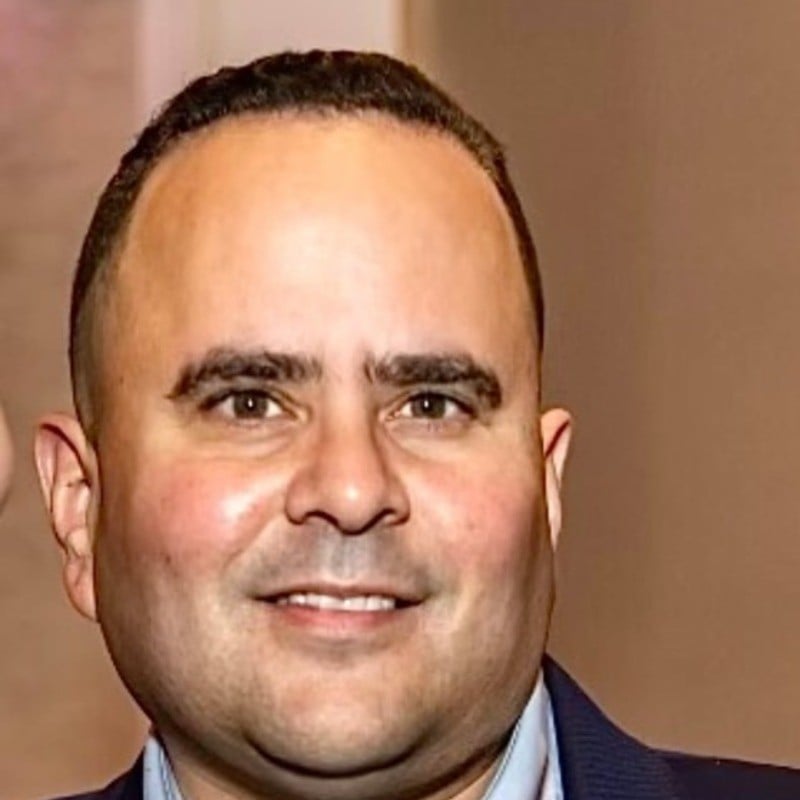
CRM & ERP Enterprise Technology Expert and Entrepreneurial Executive with 20+ years of leading CRM, ERP, Customer Experience, and Block-chain initiatives and projects across internal and customer facing technologies. Proven success in closing large deals in Pre Sales customer facing engagements and deploying enterprise wide CRM & Customer Experience solutions internationally and domestically.