
Financial advisors are switching on AI features inside their CRMs faster than their compliance manuals can keep up. Wealthbox now ships an AI Notetaker that joins Zoom, phone, and in-person meetings and drops structured summaries straight onto the client record; Redtail bundles the Finmate AI note-taker at no extra cost; and both platforms rolled out conversational AI assistants and agentic workflows in 2026. Every one of those AI outputs — the transcript, the summary, the auto-drafted follow-up email, the AI-written meeting recap — is a business record the SEC can ask to see. This guide walks CRM buyers and RIA operations leaders through exactly what changes when you enable AI in an advisor CRM, and how to configure it so a new productivity tool doesn’t quietly become an examination finding.
Key Takeaways
- AI-generated meeting transcripts, summaries, and drafted communications created inside your CRM are books-and-records under SEC Rule 204-2 for RIAs — they must be retained, generally for five years, with the first two years easily accessible.
- The SEC Marketing Rule (206(4)-1) is explicitly technology-neutral: AI-assisted content is held to the same disclosure, substantiation, and recordkeeping standards as anything a human wrote.
- Off-channel enforcement has not gone away. In January 2025 the SEC fined a group of firms roughly $63 million for failing to preserve electronic communications, and in 2026 FINRA has shifted to holding individuals personally accountable through routine cycle exams.
- The compliance question with AI notetakers isn’t “should we use it” — it’s “is the output captured, retained, supervised, and disclosed.” Configuration, not abstinence, is the answer.
- Dually-registered firms carry a second layer: broker-dealer recordkeeping under SEC Rule 17a-4, which since 2023 allows a time-stamped audit-trail system as an alternative to traditional WORM storage.
Why an AI Notetaker Is Now Your Problem, Not Just Your Vendor’s
Here’s the scenario an examiner cares about. An advisor takes a client call, the CRM’s AI notetaker transcribes it, generates a summary that includes a specific recommendation (“we discussed moving the rollover into the model portfolio”), and drafts a follow-up email the advisor edits and sends. Three regulated records were just created inside your CRM in under a minute: a written communication relating to advice, a record that may substantiate — or contradict — the recommendation, and an outbound client communication. None of them existed in your workflow a year ago, and most firms have never written a policy governing them.
SEC Rule 204-2 — the books-and-records rule for registered investment advisers — requires firms to retain written communications sent and received that relate to recommendations, advice, and client instructions. It is medium-agnostic: it doesn’t matter whether a human or a language model produced the text. The SEC Marketing Rule (206(4)-1), effective since November 2022, is described by compliance specialists as technology-neutral for the same reason — AI-assisted content used to advertise the firm gets no discount on the disclosure, substantiation, and retention obligations that apply to everything else.
The uncomfortable truth: adopting an AI notetaker doesn’t add a feature to your CRM so much as it adds a records-generating machine to your regulated environment. The good news is that the leading advisor CRMs were built for this world, and the controls you need are mostly configuration and policy, not custom engineering.
Step 1: Inventory Every AI Output the CRM Can Produce
Before you enable anything, list what the AI actually creates and where it lands. In practice this includes:
- Raw transcripts of client meetings and calls.
- Structured summaries and highlights written onto the contact or household record.
- AI-drafted follow-up emails and task lists.
- AI-assistant chat outputs — reports, charts, and answers a conversational assistant generates on demand.
- Agentic actions — where an AI agent or “playbook” updates a field, creates an opportunity, or sends a message on the advisor’s behalf.
Wealthbox, for example, added its AI Notetaker (an add-on priced around $49 per user per month at its 2026 introductory rate) that transcribes across Zoom, phone, and in-person meetings, and in 2026 shipped AI Agents, Playbooks, and an AI Assistant that move the CRM “from a system of record toward a system of action,” per the platform’s own materials. Redtail bundles the Finmate AI note-taker. Each of those outputs needs a home in your records inventory before go-live, not after.
Step 2: Decide What Is a Record — and Set Retention Accordingly
Not every byte the AI produces has to live forever, but you must make a deliberate, documented decision rather than defaulting to your vendor’s settings. A useful way to frame it:
| AI output | Likely record status (RIA) | Practical retention posture |
|---|---|---|
| Final meeting summary saved to client record | Books-and-records communication under 204-2 | Retain in an accessible, tamper-evident store; generally 5 years, first 2 easily accessible |
| AI-drafted email actually sent to a client | Client communication — a record | Capture through your email archiving channel, same as any advisor email |
| Raw verbatim transcript | Firm policy call — often treated as a record if it supports advice | Decide once, apply consistently; don’t retain ad hoc |
| AI-assistant chat that generated a client-facing report | Record if the output is used with clients or to advertise | Retain the output; log the prompt where feasible |
| Discarded AI draft the advisor never used | Generally not a communication | Define a deletion policy so “draft” doesn’t become “selective destruction” |
The single most dangerous move is inconsistency. If your policy says transcripts aren’t retained but three advisors keep them and two delete them, an examiner sees selective recordkeeping. Pick a rule and enforce it in the platform’s configuration, not in individual habits.
Step 3: Route AI Communications Through Your Archiving Channel
This is where the off-channel enforcement wave meets AI. Regulators have spent two years penalizing firms for business communications that happened on unmonitored channels — texts, WhatsApp, WeChat. In June 2025, Velox Clearing drew a reported $1.3 million FINRA sanction plus $500,000 from the SEC after more than 10,000 WeChat messages went unretained. The pattern in 2026, as tracked by Advisor Perspectives, is that FINRA is surfacing these failures through routine cycle exams and increasingly barring the individuals responsible.
An AI notetaker can become an off-channel problem in a heartbeat if its output bypasses your archive. If the summary lives only inside the CRM’s notes field and never flows to your capture system — or if an AI assistant emails a client from an address your archiving doesn’t cover — you’ve recreated the exact gap the SEC has been fining. Before go-live, confirm that every AI-generated client communication is captured by the same archiving pipeline that already covers advisor email and text. Redtail’s built-in compliant email and text archiving modules exist precisely so this doesn’t fall through the cracks; if your CRM lacks native capture, integrate a third-party archive (Smarsh, Global Relay, and similar) into the AI workflow.
https://www.youtube.com/watch?v=qKekxk_mFCs
Step 4: Supervise AI Content Like You Supervise a Junior Associate
AI notetakers hallucinate. They mishear numbers, invent action items, and occasionally attribute a recommendation to the wrong party. Under the Marketing Rule’s general prohibitions, an advertisement can’t be materially misleading — and a misstated performance figure or fabricated “agreed next step” in a client-facing AI summary is exactly the kind of thing that turns a convenience feature into a violation. Build a human-in-the-loop review step: the advisor must read and approve every AI summary before it’s finalized on the record, and no AI-drafted client email goes out unedited. Document that this review happens. “The model wrote it” is not a defense the SEC recognizes.
Step 5: Handle Testimonials, Endorsements, and AI-Written Marketing With Extra Care
If you use the CRM’s AI assistant to draft marketing copy, review language, or campaign content, remember the Marketing Rule’s specific regime for testimonials and endorsements — disclosure of compensation and material conflicts, and retention of the supporting records. In January 2026, SEC staff clarified that certain SRO disciplinary orders don’t automatically disqualify someone from giving compensated testimonials, provided eligibility and disclosure conditions are met, per the 2026 guidance summaries. AI can accelerate producing this content; it can’t absorb the compliance obligations attached to it. Keep the substantiation file for any performance claim your AI helps write.
Step 6: If You’re Dually Registered, Layer In Broker-Dealer Rules
Many advisory practices sit under a broker-dealer as well. That adds SEC Rule 17a-4 and FINRA books-and-records obligations on top of 204-2. The 2022 amendments to Rule 17a-4 (compliance date May 2023) modernized electronic recordkeeping by adding an audit-trail alternative to the long-standing WORM (write-once, read-many) requirement. Under the audit-trail option, your system must maintain a complete, time-stamped record of every modification and deletion — who changed what, and when — so an original record can be recreated. For AI-generated content that gets edited before it’s sent, an audit-trail-capable archive is often a cleaner fit than rigid WORM storage. Confirm your CRM’s archiving integration actually meets whichever standard your firm relies on.
CRM Experts Online’s Perspective
We implement and integrate CRMs across Salesforce, HubSpot, Zoho, NetSuite, SugarCRM, and SuiteCRM, and we work with regulated firms where the CRM is also the compliance system of record. Our consistent advice to advisory clients in 2026: turn the AI features on, but sequence it correctly. Configuration before enablement. Every firm we see that got burned did the opposite — advisors switched on an AI notetaker individually because it saved them twenty minutes a meeting, and nobody asked where the transcript went or whether it was archived.
The practical pattern that works: run a two-week controlled pilot with a small advisor group, map every AI output to a retention decision, verify capture end-to-end (record something, then go find it in the archive), write a one-page AI-use policy that names what’s retained and what’s reviewed, and only then roll out firm-wide. This is the same disciplined-adoption approach we advocate for any AI agent in a CRM — the regulated-industry version just raises the stakes from “messy data” to “examination finding.” Where a firm’s CRM lacks native compliant archiving, we integrate a dedicated archive into the AI workflow so nothing lands in an unmonitored channel. And for firms on general-purpose CRMs like Salesforce, HubSpot, or Zoho rather than an advisor-specific platform, we build the same controls with automation and integration rather than relying on a bundled feature.
FAQ
Are AI meeting transcripts really regulated records for an RIA? If the meeting relates to advice, recommendations, or client instructions, the resulting written communication falls under Rule 204-2’s recordkeeping obligations. Your firm should make a documented decision on transcript versus summary retention and apply it consistently.
How long do we have to keep AI-generated communications? For RIAs, the general standard under the books-and-records rule is five years, with the first two years in an easily accessible location. Marketing materials and their supporting substantiation follow the same retention logic under the Marketing Rule.
Does using AI-assisted content trigger different Marketing Rule treatment? No — and that’s the point. The rule is technology-neutral. AI-written advertising is held to the identical standards on misleading statements, substantiation, disclosures, testimonials, and recordkeeping as human-written content.
Is off-channel enforcement still active in 2026? Yes. Following the SEC’s roughly $63 million round of penalties in January 2025, FINRA has continued the crackdown through routine cycle examinations and is increasingly holding individual representatives — not just firms — accountable.
What’s the difference between WORM and the audit-trail alternative? WORM prevents records from being altered or deleted at all. The audit-trail alternative, added to Rule 17a-4 for broker-dealers in 2023, instead requires a complete time-stamped log of every change and deletion so any original can be reconstructed. Broker-dealer and dually-registered firms can choose either; RIAs are governed primarily by Rule 204-2.
Can we let an AI agent send client emails automatically? Technically yes, but you should require human review before send, ensure the outbound message is captured by your archive, and document the supervisory step. An unreviewed, unarchived AI email to a client is precisely the exposure regulators have been penalizing.
We’re on Salesforce/HubSpot/Zoho, not an advisor CRM. Do these rules still apply? The regulatory obligations attach to your firm, not to the software. If your general-purpose CRM generates AI content used with clients, you need the same inventory, retention, capture, and supervision controls — typically built through integrations and automation rather than a bundled compliance module.
Who owns this — compliance or operations? Both. The CCO owns the policy and retention decisions; operations and your implementation partner own the configuration that makes the policy actually true inside the platform. The failures we see come from a policy that exists on paper but was never enforced in the system.
Conclusion
The AI notetaker in your advisor CRM is one of the highest-ROI productivity features to reach wealth management in years — and it quietly changed your compliance surface the moment you enabled it. You don’t need to avoid it. You need to inventory what it produces, decide what’s a record, route every client-facing output through your archive, keep a human in the loop, and document all of it before you scale. If you’re rolling out AI features in Wealthbox, Redtail, Salesforce, HubSpot, Zoho, or any CRM inside a regulated advisory practice, CRM Experts Online can design the configuration, archiving integration, and rollout plan so your productivity gains don’t become your next exam finding. Schedule a consultation and we’ll map your AI recordkeeping controls before go-live, not after.
Further Reading
- SEC — Marketing Compliance Frequently Asked Questions
- SEC — Amendments to Electronic Recordkeeping Requirements for Broker-Dealers
- Global Relay — Leveraging SEC Rule 204-2 for Compliance
- SEC Marketing Rule (206(4)-1): The 2026 Guide for RIAs
- Advisor Perspectives — How FINRA Took the SEC’s Baton on Off-Channel Penalties
- Wealthbox — Announcing the AI Notetaker
- SmartAsset — Wealthbox CRM Review 2026
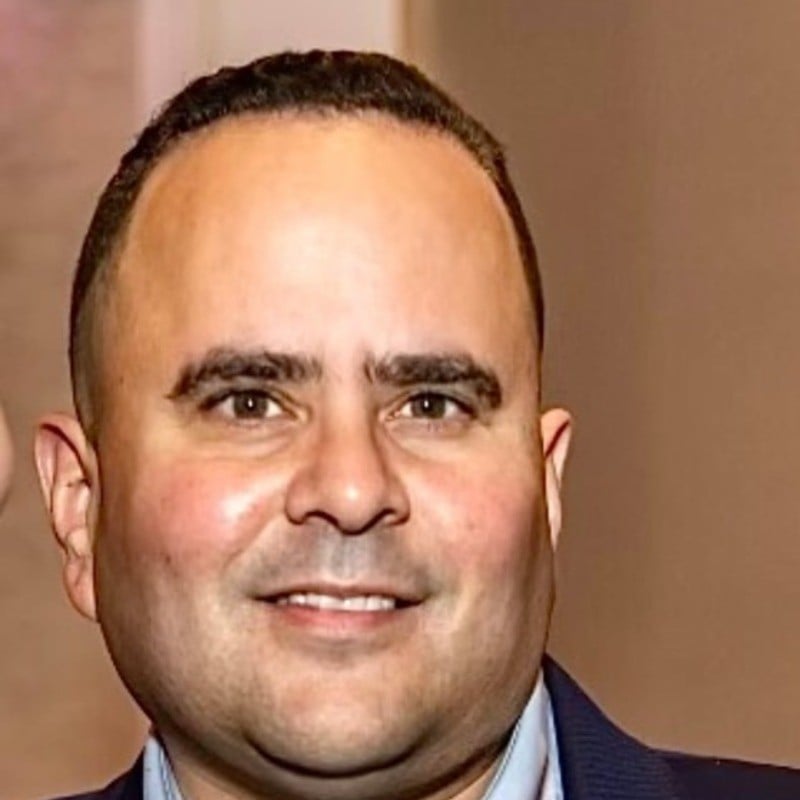
CRM & ERP Enterprise Technology Expert and Entrepreneurial Executive with 20+ years of leading CRM, ERP, Customer Experience, and Block-chain initiatives and projects across internal and customer facing technologies. Proven success in closing large deals in Pre Sales customer facing engagements and deploying enterprise wide CRM & Customer Experience solutions internationally and domestically.