
Here is the sentence that should be keeping every healthcare CRM administrator up at night: the moment an AI agent inside your CRM reads a patient’s name next to a diagnosis, an appointment, or a copay, that agent is handling protected health information — and under HIPAA, it is held to exactly the same Privacy and Security Rule obligations as a human employee. It does not get a pass for being software. And unlike a human employee, it can touch thousands of records in an afternoon.
Through 2025 and into 2026, the major CRM vendors shipped healthcare-specific AI agents at speed. Salesforce announced Agentforce for Health in February 2025 and, by March 2026, had added six more pre-built health agents covering referral triage, hospital operations, claims resolution, patient scheduling, rural health outreach, and even infectious-disease pattern recognition. HubSpot, Zoho, and others now sign Business Associate Agreements for their platforms. The technology is ready. The question is whether your configuration is — because a signed BAA enables compliance, it does not deliver it. This is the checklist we walk every regulated client through before an agent goes anywhere near real PHI.
Key Takeaways
- An AI agent that touches PHI is a workforce member in HIPAA’s eyes: minimum-necessary access, audit controls under 45 CFR §164.312(b), and the 60-day breach-notification clock all apply to it.
- A vendor BAA is necessary but not sufficient — it covers only specific “covered services,” and it does not make your specific implementation compliant.
- Salesforce (Einstein Trust Layer + Shield), HubSpot (Enterprise + sensitive-data settings), and Zoho CRM all offer a HIPAA path, but each has real edition and feature boundaries you must verify.
- The riskiest properties of agents are non-determinism, permission sprawl, and undocumented decisions — the exact things HIPAA auditors probe.
- Scope each agent narrowly, log every action immutably, and pilot on de-identified or synthetic data before you ever point it at a production PHI record.
Why an AI Agent Changes Your HIPAA Risk Profile
A traditional CRM automation is deterministic: it fires the same way every time, and you can document exactly what it does. An AI agent is different in three ways that HIPAA cares about a great deal.
It is non-deterministic. As the team at Digital Mass bluntly put it in their analysis of Agentforce healthcare deployments, “ask an Agentforce agent the same question twice, and you may get slightly different responses.” HIPAA expects predictable, auditable handling of PHI. Variability is not automatically a violation, but it means you cannot rely on “we tested it once” as evidence of how it behaves.
It operates with its own access. Agents carry their own permission sets and data-access configurations. In healthcare orgs where users have accumulated broad access over years — and where “PHI sprawl” has scattered sensitive fields across objects that were never audited — pointing an agent at that data dramatically expands the blast radius of a single misconfiguration.
It executes processes that must be documented. Regulators expect you to be able to explain what a business associate does with PHI. An agent orchestrating a referral or a claims-status lookup is running a process. If that process lives only inside a prompt nobody wrote down, you have a documentation gap the moment an auditor asks.
None of this makes agents unsafe. It makes them a governed capability rather than a plug-and-play feature. Here is how to govern them.
The 9-Control Pre-Deployment Checklist
- Get the BAA — and read what it actually covers. A Business Associate Agreement is legally required whenever a vendor processes PHI on your behalf. Every major CRM will sign one, but the coverage is narrower than most buyers assume. HubSpot is only HIPAA-eligible on Enterprise editions with sensitive-data settings activated, and the BAA covers only specific “covered services” — Free, Starter, and Professional tiers are not eligible at all. Zoho will sign a BAA across its services, including Zoho CRM (request the template via [email protected]). Salesforce offers a BAA that covers Agentforce. In every case, confirm in writing that the AI agent feature you intend to use falls inside the covered-services list, not just the core CRM.
- Update the BAA for AI-specific risks. A 2026-grade BAA should include explicit clauses on whether your PHI can be used for model training (it should not be), data-retention limits, and subcontractor obligations for any model provider sitting behind the agent. If the contract predates your AI rollout, it almost certainly does not address these.
- Enforce minimum-necessary access at the agent level. Do not let an agent inherit a broad human role. Give it its own permission set scoped to only the objects and fields it genuinely needs. A scheduling agent does not need clinical notes; a benefits-eligibility agent does not need the full care plan.
- Turn on real-time PHI masking. Salesforce’s Einstein Trust Layer provides real-time data masking, audit trails, and zero-trust access precisely so that PHI is protected before it is passed to a model. If your platform offers an equivalent, enable it. If it does not, that is a signal the feature may not belong in your PHI workflow yet.
- Encrypt PHI at rest and in transit, and consider platform encryption add-ons. Zoho CRM offers encrypted fields with AES-256 to protect health information; Salesforce Shield adds platform encryption and event monitoring on top of Health Cloud. Field-level encryption of the specific attributes an agent reads or writes is table stakes, not a nice-to-have.
- Make every agent action immutably auditable. HIPAA’s audit-controls requirement (45 CFR §164.312(b)) means you must be able to reconstruct who — or what — accessed which PHI and when. Enable field audit trails and event monitoring, and design each agent action with clear inputs, outputs, error handling, and logging at every step. If an agent decision cannot be traced, it cannot be defended.
- Scope each agent to one job. The single most effective governance move is narrow scope: each agent should do one category of work with clearly defined boundaries. A tightly scoped “referral status” agent is auditable and low-risk. A sprawling “do anything a rep asks” agent is neither.
- Review every integration in the chain. When an agent orchestrates an external callout — an EHR lookup, a payer API, a document service — each hop that touches PHI needs its own compliance review and, where the third party processes PHI, its own BAA. The agent is only as compliant as the least-governed system it calls.
- Pilot on de-identified or synthetic data first. Never let an agent’s first encounter with a PHI record happen in production. Validate behavior, permissions, and logging against de-identified or synthetic data, document the results, and only then promote it — through a sandbox and a real release process — to live data.
How the Major Platforms Compare on Healthcare Readiness
The right platform depends on what you already run, but the HIPAA posture differs in ways worth knowing before you commit an agent rollout to any one of them.
| Platform | Signs a BAA? | Edition / condition | Key agent-era controls |
|---|---|---|---|
| Salesforce Health Cloud + Agentforce | Yes, covers Agentforce | Health Cloud; Shield recommended | Einstein Trust Layer (masking, audit, zero-trust); Agentforce Voice now HIPAA-ready; 6 pre-built health agents (2026) |
| HubSpot | Yes | Enterprise only; sensitive-data settings on; covered services only | Sensitive-data storage controls; not eligible on Free/Starter/Pro tiers |
| Zoho CRM | Yes, across services | BAA via [email protected] | AES-256 encrypted fields, restricted access, audit logs |
Notice what the table does not say: none of these entries means “compliant out of the box.” Each is a platform on which a compliant deployment is possible if you configure, govern, and monitor it correctly. That gap between “HIPAA-eligible platform” and “HIPAA-compliant implementation” is exactly where healthcare organizations get burned.
Common Mistakes That Turn a Compliant Platform Into a Violation
- Assuming the BAA is the finish line. It is the starting line. The BAA enables compliance; your configuration determines it.
- Letting an agent inherit a human’s broad access. This is how a scheduling assistant ends up able to read clinical records nobody meant to expose.
- Deploying on a non-eligible tier. Running patient data through HubSpot Professional or a free Zoho edition is a violation regardless of how careful your workflow is.
- Skipping the integration review. The CRM is compliant, but the third-party API the agent calls has no BAA — and PHI just left the building.
- No documentation of what the agent does. If you cannot produce a plain-English description of the agent’s process and its access, you cannot pass an audit.
CRM Experts Online’s Perspective
We implement CRM and ERP for organizations in regulated industries, and the pattern we see with healthcare AI agents in 2026 is consistent: the technology is far ahead of most organizations’ governance. Buyers rush to switch on an agent because the demo was impressive, then discover after the fact that the agent’s permission set was inherited wholesale from an admin profile, or that the BAA they signed two years ago says nothing about model training.
Our approach is to treat every AI agent as a new member of the workforce and onboard it the way HIPAA expects you to onboard a person: give it the least access that lets it do its job, write down exactly what that job is, log everything it does, and supervise it during a probationary period on data that isn’t real patient data. That sounds conservative, and it is — deliberately. The organizations that move fastest with healthcare agents in the long run are the ones that built the audit trail and the scoping discipline in from day one, because they never have to stop and unwind a rollout after a scare.
The good news is that the controls above are not exotic. The Einstein Trust Layer, Shield, HubSpot’s sensitive-data settings, Zoho’s encrypted fields and audit logs — these already exist in the platforms you’re evaluating or running. What’s usually missing is not a feature. It’s a deliberate configuration plan and someone accountable for maintaining it as the agents evolve.
FAQ
Does a signed BAA make my healthcare CRM HIPAA compliant? No. A BAA is a legal requirement that binds your vendor to HIPAA standards, but it only enables compliance. Your specific configuration — access scoping, encryption, audit logging, documentation — determines whether your actual implementation is compliant.
Is an AI agent legally a “business associate”? The vendor providing the agent is the business associate, and the agent itself is treated as part of the workforce handling PHI. Either way, it must follow the same Privacy and Security Rule obligations as a human employee, including minimum-necessary access and audit controls.
Can I use HubSpot’s free or Professional tier for patient data if I’m careful? No. HubSpot is only HIPAA-eligible on Enterprise editions with sensitive-data settings activated and a BAA in place. Free, Starter, and Professional tiers are not eligible, and no amount of careful workflow design changes that.
Will Zoho CRM sign a BAA? Yes. Zoho will sign a BAA covering its services, including Zoho CRM; you can request the template from [email protected]. Zoho CRM also provides AES-256 encrypted fields, restricted access, and audit logs to support compliant PHI handling.
What is the Einstein Trust Layer and do I need it? It’s Salesforce’s set of data-privacy controls for AI — real-time masking, audit trails, and zero-trust access — that protect PHI before it reaches a model. If you’re running Agentforce on Health Cloud with PHI, these controls (typically paired with Salesforce Shield) are central to a defensible deployment.
How do I handle the agent’s non-deterministic responses for audit purposes? You cannot make a generative agent perfectly deterministic, so you compensate with narrow scope, comprehensive action-level logging, and documented boundaries. The goal is that every PHI access an agent performs is traceable and explainable, even if the exact wording of its output varies.
Where should we start if we’ve already turned an agent on in production? Pause and audit: review the agent’s permission set against minimum-necessary, confirm the BAA covers the specific feature, verify audit logging is capturing agent actions, and check every integration in the chain for its own BAA. Then document what the agent does before you extend it further.
Conclusion
Healthcare AI agents inside your CRM are no longer speculative — Salesforce, HubSpot, and Zoho have all shipped the platform pieces, and by 2026 there are pre-built agents for referrals, scheduling, claims, and more. But the vendors have handed you a powerful, HIPAA-eligible tool, not a compliant deployment. The distance between those two things is configuration, governance, and documentation — and that distance is where organizations either build durable trust or expose themselves to a breach.
If your organization is evaluating or already running AI agents on patient data, CRM Experts Online can help you scope agents to minimum-necessary access, stand up the audit trail regulators expect, and pilot safely on de-identified data before go-live. Schedule a consultation with our team to build a healthcare AI agent rollout that holds up to an audit.
Further Reading
- Salesforce: Agentforce for Health announcement
- Digital Mass: Healthcare Salesforce orgs, Agentforce, and HIPAA compliance
- Atlan: HIPAA compliance for AI agents — PHI rules and controls (2026)
- HIPAA Journal: Is HubSpot HIPAA compliant?
- Zoho CRM: HIPAA compliance overview
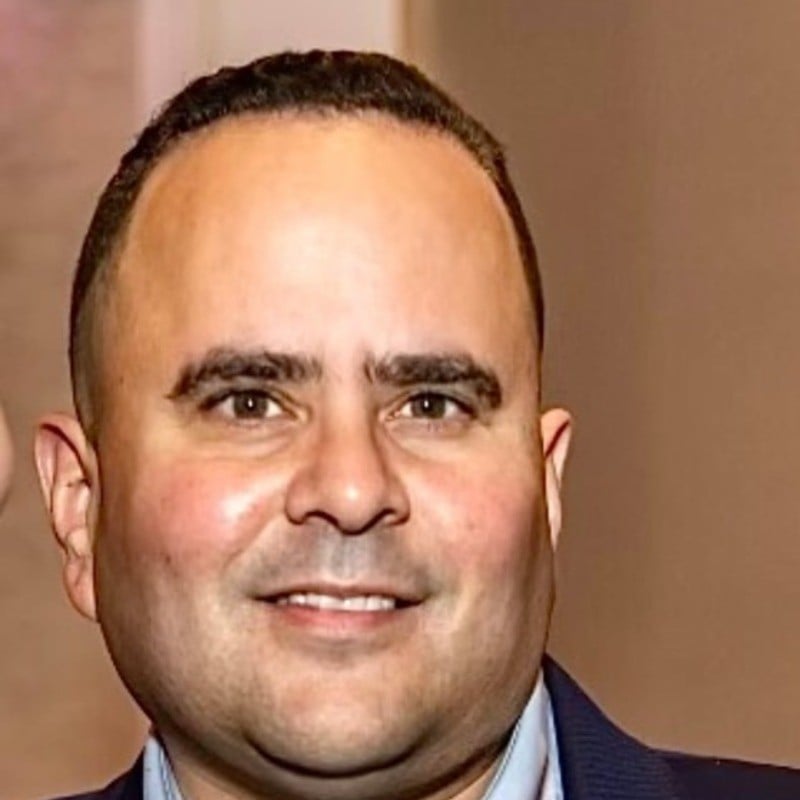
CRM & ERP Enterprise Technology Expert and Entrepreneurial Executive with 20+ years of leading CRM, ERP, Customer Experience, and Block-chain initiatives and projects across internal and customer facing technologies. Proven success in closing large deals in Pre Sales customer facing engagements and deploying enterprise wide CRM & Customer Experience solutions internationally and domestically.