
AI is revolutionizing CRM systems by automating tasks, improving customer experiences, and driving business growth. Here’s a quick overview of the top AI components reshaping CRM:
- Natural Language Processing (NLP): Analyzes unstructured data (like emails and chats) to improve customer interactions.
- Machine Learning (ML): Identifies patterns in data for better customer segmentation and predictions.
- Predictive Analytics: Forecasts customer behavior to reduce churn and identify sales opportunities.
- Virtual Assistants: Handles routine tasks, freeing up human agents for complex issues.
- AI Chatbots: Provides 24/7 support, resolving common inquiries quickly.
- Automated Data Entry: Reduces manual errors and speeds up CRM updates.
- Sentiment Analysis: Understands customer emotions to improve satisfaction.
- Recommendation Engines: Offers personalized product suggestions to boost sales.
- Workflow Automation: Streamlines repetitive tasks like lead scoring and follow-ups.
- AI-Powered Reporting: Delivers actionable insights and forecasts for better decision-making.
Quick Comparison
| AI Component | Key Benefit | Limitation | Example Use Case |
|---|---|---|---|
| NLP | Organizes unstructured data | Struggles with nuance and context | Sentiment analysis, ticket sorting |
| ML | Improves predictions and segmentation | Needs high-quality data | Churn prediction, lead scoring |
| Predictive Analytics | Anticipates customer needs | Data quality affects accuracy | Sales forecasting, cross-selling |
| Virtual Assistants | Automates routine tasks | Limited empathy and creativity | Appointment scheduling, FAQs |
| AI Chatbots | 24/7 customer support | Struggles with complex queries | Real-time customer interactions |
| Automated Data Entry | Reduces manual errors | Requires structured data | CRM updates, lead capture |
| Sentiment Analysis | Tracks customer emotions | Misinterprets sarcasm or slang | Social media monitoring, feedback analysis |
| Recommendation Engines | Personalizes customer experiences | Needs extensive data | Product recommendations, upselling |
| Workflow Automation | Speeds up repetitive tasks | Integration challenges | Lead assignment, email sequences |
| AI-Powered Reporting | Generates actionable insights | Relies on accurate data | Sales forecasts, trend analysis |
These AI tools are reshaping how companies engage with customers, enabling better service, efficiency, and growth. Integrating AI into your CRM system isn’t just an option – it’s essential for staying competitive.
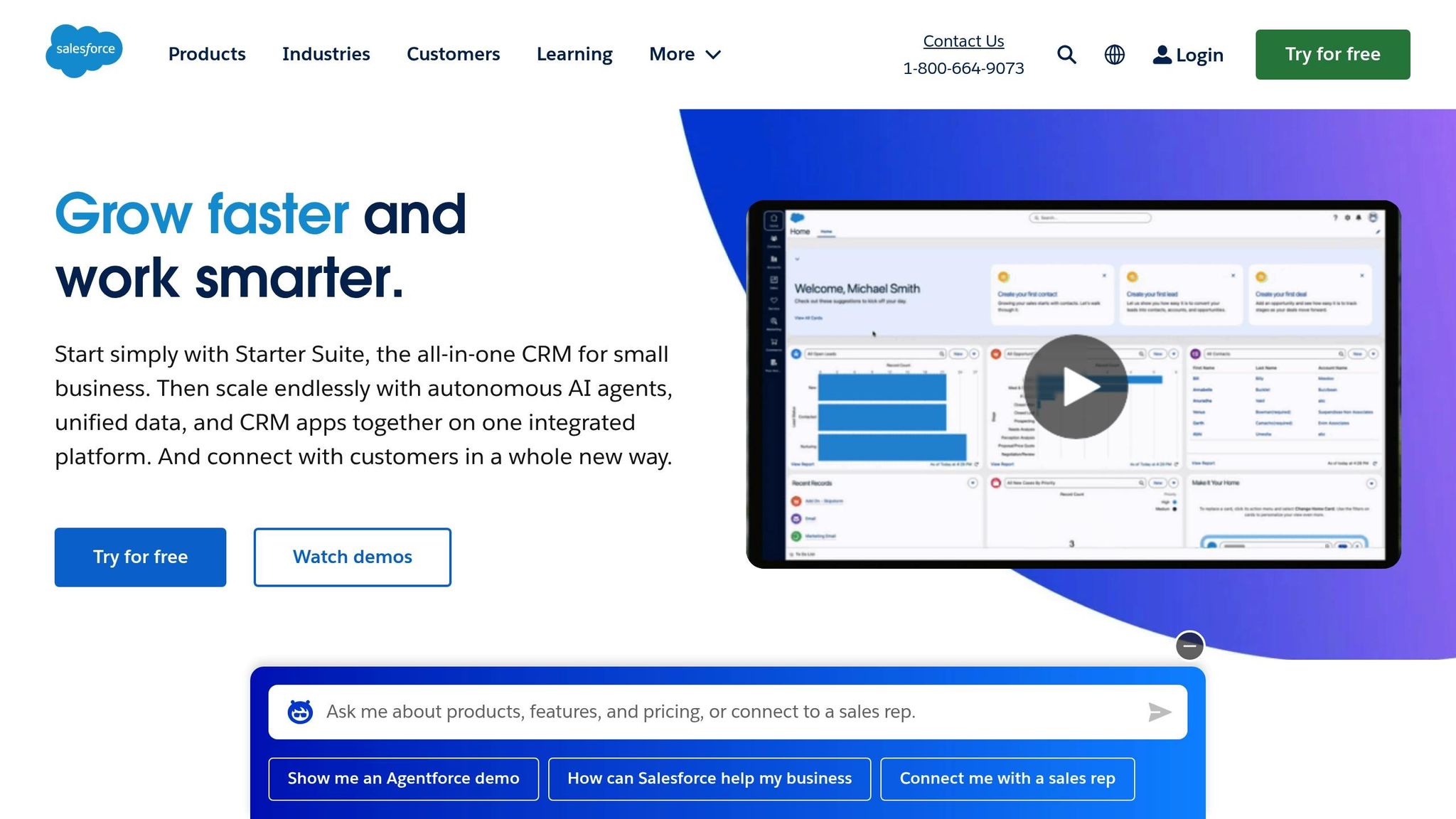
What is AI CRM and How Does it Work? | Salesforce
1. Natural Language Processing (NLP)
Natural Language Processing (NLP) is revolutionizing how CRM systems handle customer interactions. By enabling computers to interpret human language naturally, NLP processes unstructured data – like emails, chat messages, social media posts, and phone calls – to uncover actionable insights. This capability boosts CRM responsiveness and operational efficiency, making customer interactions smoother and more effective.
For instance, NLP allows CRM platforms to automatically sort customer inquiries, gauge sentiment, and direct requests to the right teams. A standout example of this is McDonald’s partnership with IBM in 2021 to implement Automated Order Taking (AOT) technology. This system used NLP to process spoken orders accurately, enhancing both speed and accuracy. The result? Over $18 billion in digital channel sales that year – an impressive leap forward [7].
Business Benefit
NLP’s practical applications bring clear advantages. It powers 24/7 chatbots that not only reduce response times but also personalize replies based on previous interactions. This leads to greater efficiency and improved customer satisfaction. Take American Airlines, for example: by integrating NLP into its IVR system, the company achieved a 5% improvement in call containment. This upgrade saved millions annually while also boosting customer satisfaction scores [6].
Key Limitation
While NLP offers immense potential, it’s not without challenges. Its effectiveness hinges on access to high-quality, relevant data. Businesses must develop strong data strategies to ensure that the information fueling NLP systems is accurate and applicable [7]. Data security is another major concern; companies need to securely store and anonymize customer data to protect it from breaches or unauthorized access [6]. Additionally, NLP systems require ongoing training and refinement to remain accurate, especially when dealing with different languages, dialects, or industry-specific terms.
Typical Use Case
One of NLP’s standout applications is sentiment analysis, where it identifies emotions behind customer messages and helps businesses respond with empathy and urgency. It also excels at sorting support tickets and improving voice interfaces, enabling faster, more contextual responses. With 77% of CEOs believing voice recognition enhances brand and customer experience, and 68% of users finding it both easy to use and time-saving, NLP-powered voice interfaces are quickly becoming standard in CRM systems [8]. Beyond that, NLP improves intelligent search within knowledge bases by understanding the intent and context of user queries, delivering more accurate and relevant results than traditional keyword searches.
2. Machine Learning Algorithms
Once natural language processing (NLP) deciphers customer communications, machine learning (ML) takes it a step further by uncovering actionable insights from complex datasets. ML algorithms are the driving force behind CRM systems, identifying patterns in customer data that go beyond human capacity. Unlike traditional rule-based systems, these algorithms continuously learn and improve, refining their accuracy and insights over time.
One of the standout strengths of ML in CRM is customer segmentation. By analyzing large datasets filled with geographic, demographic, behavioral, and psychological details, ML creates highly specific customer groups. This process not only saves time and reduces human error but also allows businesses to scale segmentation across massive customer bases with ease [9].
Take Amazon’s personalized recommendations, Netflix’s tailored content, or Salesforce’s Einstein AI predicting sales opportunities – these are all examples of ML in action, boosting engagement and revenue [15].
Business Benefit
Companies leveraging ML-powered CRM systems are reaping measurable rewards. Studies show a 20% increase in customer retention and a 25% boost in sales productivity [11]. Additionally, customer satisfaction rates climb by 30%, while operational efficiency improves by 25% [11]. With 80% of consumers more likely to buy from brands offering personalized experiences [12], ML enables the kind of hyper-personalized interactions that strengthen loyalty and drive growth. When paired with tools like NLP, ML becomes part of a broader strategy to revolutionize CRM systems.
Key Limitation
Despite its advantages, ML in CRM comes with challenges. The most pressing issue is data quality – ML algorithms are only as effective as the data they process. Poor or biased data can lead to flawed outcomes, such as minorities facing stricter credit conditions or unfair pricing [13].
"You need to know what you want to achieve. It seems simple when I say that, but most of the time the company wants to create AI, but they do not know what they want to achieve or what they want to deliver at the end. So, the question you want to answer is the key. You need to define what you want to deliver, and it will totally define the data you collect and analyze." – Chief Executive Officer (CEO) of an AI solution provider [14]
Another concern is over-automation. When ML systems dominate customer interactions, they can feel cold and mechanical. In fact, 63% of digital marketing leaders struggle to deliver personalized experiences, often because of over-reliance on automation without proper human oversight [10]. Integration hurdles and resistance to AI adoption – both from customers and employees – can further limit the potential of these systems.
Typical Use Case
Practical applications of ML in CRM highlight its ability to improve efficiency and retain customers. Two standout use cases are automated lead scoring and churn prediction. By analyzing customer interactions, purchase histories, and engagement patterns, ML identifies high-converting prospects and flags customers at risk of leaving. Research by Zhang found that Support Vector Machine (SVM) models could predict customer churn with over 85% accuracy, enabling businesses to take proactive steps to retain customers [11].
"Instead of hard-coded rules, machine learning uses algorithms and statistical methods to analyze data, improve performance and adapt to new inputs. You can give it data, but you have to teach it how to think. You have to give it the structure in which to learn. It has to know what information is good and what information is bad. So it’s not this unsupervised learning experience where you give it data and know it will figure it all out." – Dexter Nelson, Founder and Lead Engineer and Programmer, TechDex Development and Solutions [16]
Dynamic customer segmentation is another game-changer. ML continuously analyzes customer behavior and updates segments as preferences shift. This real-time adaptability leads to more relevant marketing messages and product suggestions, with some businesses reporting a 15% increase in repeat purchases among targeted groups [11]. These applications underscore the importance of thoughtful integration into CRM strategies.
Investment in ML continues to grow, with projections suggesting the market will surpass $209 billion by 2029 [16].
3. Predictive Analytics
Predictive analytics uses historical data, statistical methods, and machine learning to forecast customer behavior and business outcomes. Modern CRM systems harness this capability to predict customer churn and identify cross-selling opportunities, helping businesses stay ahead of market changes [17]. By anticipating customer needs, companies can make informed decisions and respond quickly to shifting market dynamics.
Business Benefit
The financial advantages of predictive analytics in CRM are hard to ignore. Gartner predicts that integrating AI into CRM systems will help global businesses generate an additional $1.1 trillion in revenue by 2025 [18]. This technology empowers companies to make swift, data-driven decisions that directly impact their bottom line [18].
The global predictive analytics market has seen rapid growth, increasing from $3.49 billion in 2016 to an estimated $10.95 billion by 2022 [21]. Yet, only 28% of U.S. businesses currently use predictive analytics, despite the majority considering it critical to their operations [21]. Companies that invest in predictive marketing often see clear returns, with 86% of executives using it for over two years reporting improved ROI [21].
"Predictive analytics allows them to turn that data into insights they can use to make better decisions and improve outcomes across their business." – Salesforce [21]
Key Limitation
Despite its promise, implementing predictive analytics comes with challenges. Gartner estimates that through 2023, 75% of AI integration efforts will take twice as long as planned due to issues with data quality and integration [25]. Poor-quality data can lead to unreliable predictions, which may negatively impact business decisions [23][24].
Smaller businesses often face additional hurdles, such as resource constraints and the complexity of deploying these systems. According to Fortune Business Insights, the predictive analytics market is projected to grow from $18 billion in 2024 to $95 billion by 2032, reflecting its increasing demand and complexity [22].
Ethical concerns also add a layer of difficulty. Predicting customer behavior requires extensive data collection, raising privacy issues. Additionally, biases in data models can result in unfair treatment of customers [23]. Over-reliance on predictions without considering external factors may lead to flawed decisions, while a lack of transparency in algorithms can erode trust [22].
"The goal is to turn data into information, and information into insight." – Carly Fiorina, Former CEO of HP [26]
Typical Use Case
Real-world examples showcase how predictive analytics enhances CRM systems. Texas Children’s Hospital, for instance, developed a model that incorporated social and psychological factors, reducing repeat admissions by 30.9% [21].
Major corporations also leverage predictive analytics in innovative ways. Netflix uses it to recommend content, UPS optimizes fuel efficiency through predictive routing, and Walmart forecasts demand by analyzing weather and sales data to streamline supply chain operations [20]. These applications not only improve customer experiences but also enhance operational efficiency.
In logistics, MoversTech CRM employs predictive analytics to forecast delivery times, identify potential delays, and adjust routes dynamically [19]. This proactive approach minimizes disruptions and enhances customer satisfaction.
"Predictive analytics transforms logistics decision-making by enabling data-driven strategies that improve efficiency, reduce risks, and enhance customer satisfaction." – RoboticsandAutomationNews.com [19]
The benefits are measurable across industries. McKinsey reports that AI-powered sales forecasting can boost accuracy by up to 50%, while Aberdeen Group notes that companies using AI-driven customer segmentation see a 15% increase in customer retention rates [25]. These examples highlight the tangible value predictive analytics delivers when effectively integrated into CRM systems.
4. Virtual Assistants
As AI continues to shape the CRM landscape, virtual assistants represent a leap forward by directly engaging with customers. These tools handle customer interactions, streamline data management, and improve workflows. By analyzing data and tracking interactions, virtual assistants ensure that every engagement feels relevant and timely, while freeing up human agents to focus on more complex tasks [29].
Business Benefit
The impact of virtual assistants in CRM is hard to ignore. Businesses using these AI-powered tools can reduce customer service costs by up to 30%, as they automate 80% of routine queries [29]. Beyond cost savings, these tools significantly boost customer engagement, with some companies reporting a 67% increase in lead generation [29].
Customer satisfaction also sees a noticeable improvement. A striking 80% of users who interacted with virtual assistants shared positive feedback, citing their ability to deliver quick, accurate, and tailored responses [29]. These tools handle approximately 70% of customer inquiries, lightening the load on human staff and cutting operational costs [30]. By 2023, businesses collectively saved an estimated $11 billion through the use of chatbots and virtual assistants [30].
Real-world examples highlight these benefits. An e-commerce company improved customer satisfaction by 30% in just three months after deploying a virtual assistant to manage common inquiries [28]. Similarly, a real estate agency enhanced lead management, achieving a 25% increase in closed deals within six months [28]. However, despite these successes, virtual assistants come with their own set of challenges.
Key Limitation
One significant drawback is the lack of human empathy, which some customers value during interactions [32]. Virtual assistants can struggle with complex queries, sarcasm, or subtle language nuances, leading to potential misunderstandings and frustration [34].
Integrating these systems isn’t always straightforward. It often requires substantial time, resources, and expertise [32]. Building trust in AI-driven interactions is another hurdle, as many customers prefer human agents for sensitive or intricate issues [32]. Privacy concerns also arise, as these tools rely on access to personal data to function effectively [34]. Additionally, poor internet connectivity can disrupt their performance, creating further challenges [34].
Striking the right balance between automation and human involvement is critical. Research shows that one in three consumers will abandon a brand after a single bad experience, underscoring the need for a thoughtful blend of AI and human support [33]. Over-reliance on virtual assistants can also lead to dependency, potentially reducing users’ ability to solve problems independently [34].
"The true culture of the data and of customer listening must absolutely be well rooted within the business direction." – CH14, AI-CRM Manager, Manufacturing Company [14]
Typical Use Case
Virtual assistants shine across various CRM tasks, from managing data to enhancing customer engagement. They efficiently handle data entry, organize customer information, automate routine tasks, manage leads, and analyze data [27]. They can also set reminders for deadlines, follow-ups, and key tasks, ensuring smooth customer relationship management [27].
For example, a small business improved response times from 48 hours to under four hours, significantly boosting customer retention [28]. Virtual assistants also make use of CRM communication tools to connect with clients on a more personal level. By tailoring responses based on past interactions and preferences, they strengthen relationships through automated reminders and personalized emails, while keeping teams informed about client needs [28].
In more specialized sectors, their potential is equally impressive. In healthcare, for instance, 78% of physicians acknowledge the value of medical virtual assistants in simplifying appointment scheduling [30].
"We’ll reach a point where human supervisors do one percent of the work, and the AI does 99 percent… You don’t want it to be 100 percent AI. But you want it to be a human-machine collaboration that continually refines the CX function." – Felix Winstone, Co-Founder & CEO at Talkative [31]
To implement virtual assistants effectively, organizations should start by identifying repetitive tasks and bottlenecks. Providing clear instructions, relevant data sets, and consistently monitoring performance while gathering user feedback ensures that these tools are optimized for success [30]. This approach lays the groundwork for integrating even more advanced AI solutions into CRM systems in the future.
5. AI Chatbots
While virtual assistants focus on simplifying routine tasks, AI chatbots take things a step further by actively engaging customers and managing complex CRM tasks. These systems have come a long way, evolving from simple Q&A tools to sophisticated platforms capable of transforming customer interactions.
The chatbot market reflects this growth, with a valuation of $1.19 billion in 2024 and an expected increase to $1.42 billion in 2025. This expansion aligns with the broader CRM market’s annual growth rate of 10.34% from 2024 to 2029 [37]. These advancements highlight the potential for AI chatbots to significantly improve CRM performance.
Business Benefit
AI chatbots offer measurable benefits for businesses. For example, pairing chatbots with personalized product recommendations has been shown to increase conversion rates by up to 915%. Additionally, segmented marketing campaigns that leverage chatbot-collected data can boost conversions by as much as 50% [36]. These tools also enhance forecasting, helping businesses make more informed decisions.
Real-world examples illustrate these advantages. In 2020, LATAM Airlines implemented Zendesk chatbots to handle a surge in customer service requests, cutting response times by 90% and resolving 80% of inquiries without human involvement [35]. Siemens, Europe’s largest manufacturing company, saw double-digit productivity gains and achieved an 86% customer satisfaction score after deploying AI chatbots in its Financial Services division [35]. Similarly, Photobucket experienced a 3% increase in customer satisfaction and a 17% improvement in first-resolution time after adopting chatbot technology [35].
Moreover, customers appreciate the convenience of AI. In fact, 36% of customer service professionals identify 24/7 availability as the top advantage of chatbots. This accessibility is so valued that many customers are willing to pay 19% more for immediate, consistent service [40].
Key Limitation
Despite their strengths, AI chatbots aren’t without limitations. They excel at handling routine tasks but often fall short in managing complex or nuanced interactions that require empathy or human judgment. Data privacy is another concern, as chatbots need access to customer information to deliver personalized experiences. Ensuring robust security measures is critical to maintaining trust.
Successful implementation requires careful planning. Poorly trained chatbots or inadequate integration with existing CRM systems can lead to customer dissatisfaction. This is particularly risky, as over 50% of customers are likely to switch brands after just one bad experience [36].
Researcher Dominika Kaczorowska-Spychalska describes the challenge as the "dehumanization of what is human and humanization of technology" [38], emphasizing the disconnect that can occur when businesses overly rely on automation.
Typical Use Case
AI chatbots shine in specific CRM tasks like lead qualification and customer support. For lead qualification, they engage website visitors in real time, asking targeted questions to identify high-potential leads. These leads are then routed to sales teams, while other prospects are nurtured through automated follow-ups.
In customer support, chatbots handle FAQs and streamline processes. For instance, in banking, chatbots answer basic questions, serve as interactive FAQ tools, and even assist with customer authentication to speed up service [38].
In e-commerce, chatbots guide customers through product inquiries, assist with purchases, offer tailored recommendations, and manage post-sales support, ensuring a seamless shopping experience. In healthcare, they support tasks like appointment scheduling and delivering preliminary diagnoses, all while adhering to strict data security protocols.
"We have a lot of specialists who can provide very high-touch service, but that only works if you get directed to the right specialist… It’s really about knowing who your customers are when they’re contacting support so that you can get them to the right person and answer them the right way." – Amy Velligan, director of support at Compass [35]
To implement chatbots effectively, businesses should start by identifying common customer questions and recurring issues. The chatbot should use natural, straightforward language and integrate smoothly with human agents for complex cases. Regular testing and monitoring are essential to ensure the chatbot meets customer expectations while also generating valuable insights for CRM improvement.
6. Automated Data Entry
Manual data entry can be a massive drain on time and resources for sales and customer service teams. Research shows that sales representatives spend a staggering 40% of their workday on administrative tasks like data entry. On top of that, 69% of business leaders report their teams dedicate four or more hours each week to updating their CRM systems [41]. This inefficiency creates a bottleneck in productivity – one that automated data entry can effectively resolve.
AI-powered automated data entry simplifies the process of capturing and processing customer information by directly integrating it into CRM systems. Using natural language processing and machine learning, these tools extract data from emails, forms, documents, and even customer interactions, eliminating the need for manual input.
Business Benefit
Automating data entry doesn’t just save time – it also saves money and improves accuracy. Businesses lose up to $600 billion annually due to manual entry errors, and poor data quality can cost up to 20% of a company’s revenue [43]. Each inaccurate CRM record costs about $100, making clean data a critical issue [41].
Automated systems tackle these problems head-on. With accuracy rates as high as 99.7%, organizations that adopt automation report a 34% reduction in data entry errors [42]. This leads to cleaner CRM records, more reliable insights, and better decision-making.
One standout example is Bailey International, which streamlined customer interactions by automating call routing, retrieving customer details, and tracking call data. The result? A 15% reduction in call-answer times and a 60–70% drop in call abandonment rates.
The time savings are equally compelling. Nearly 60% of workers could reclaim six or more hours per week by automating repetitive tasks [41]. This extra time allows teams to focus on building relationships, planning strategically, and driving revenue instead of being bogged down by mundane data entry.
| Aspect | Manual Data Entry | Automated Data Entry |
|---|---|---|
| Speed | Slow and labor-intensive | Fast – processes large data sets quickly |
| Error Rate | High (prone to typos and mistakes) | Low (minimal human intervention) |
| Cost Efficiency | Expensive due to labor needs | Cost-effective with reduced staffing |
| Scalability | Difficult to scale | Scales easily with growing data |
| Employee Satisfaction | Repetitive and tedious | Frees employees for meaningful work |
Key Limitation
While automated data entry offers clear advantages, it’s not without its challenges. The technology performs best with structured, standardized data. Handwritten notes, irregular document formats, or highly variable inputs can significantly reduce accuracy.
Another hurdle is implementation. A 2023 McKinsey study found employees spend an average of 4.5 hours per week on repetitive data tasks, yet many organizations struggle to know where to start with automation [44]. Common roadblocks include messy existing data, systems that break during updates, and employees unfamiliar with automation tools.
Data security also needs attention. Since these systems handle sensitive customer information, strong security protocols are crucial to comply with regulations and maintain access controls. Additionally, poorly formatted or incomplete source data can lead to errors, making ongoing data quality management essential.
Typical Use Case
Despite these challenges, automated data entry shines in practical CRM applications. For instance, email integration is a popular use case. The system captures customer communications, extracts details like contact information and project requirements, and updates CRM records automatically.
Lead capture is another area where automation excels. When prospects fill out forms or engage with marketing campaigns, automated tools create CRM records, assign lead scores, and trigger follow-up workflows instantly.
Customer service also benefits significantly. Support tickets, chat transcripts, and call summaries are automatically added to customer histories, giving service teams a complete view of every interaction.
To get started, focus on repetitive tasks that occur frequently – at least once a week. Always back up your data before testing new automation, and design your CRM structure to be stable by avoiding frequent changes to field names or formats. Considering that only 40% of CRM updates are entered manually [41], automation ensures comprehensive record-keeping and allows your CRM to focus on strategic, customer-focused activities. By automating the tedious, AI helps shift attention to what truly matters: building better relationships and driving business growth.
sbb-itb-f02ae4e
7. Sentiment Analysis
Once AI chatbots handle automated data entry and customer interactions, sentiment analysis steps in to add another layer of understanding. It goes beyond basic ratings and reviews, uncovering the emotions behind customer feedback. By turning these emotions into measurable data, businesses can take more informed actions.
This technology examines text from a variety of sources – emails, chats, social media posts, support tickets, and survey responses – to gauge whether the sentiment is positive, negative, or neutral. It picks up on language patterns and emotional cues, turning raw feedback into insights businesses can use to improve and grow.
Business Benefit
Sentiment analysis isn’t just about understanding customers – it’s about saving money and improving satisfaction. Companies using speech analytics have reported 20% to 30% cost savings, while their customer satisfaction (CSAT) scores increased by 10% or more [46]. Additionally, retaining just 5% more customers can increase revenue by up to 95% [46], making it clear how valuable this tool can be.
Real-world examples highlight its impact. T‑Mobile saw a 73% drop in customer complaints after leveraging sentiment analysis [45]. Ford uses real-time insights to quickly identify and address vehicle performance issues [45]. British Airways Holidays processed over 100,000 customer reviews in just five minutes, allowing them to respond to feedback almost instantly [48].
Key Limitation
Despite its strengths, sentiment analysis has its challenges. Context, nuance, sarcasm, and regional or industry-specific language can sometimes trip up the system, leading to misinterpretations. Informal language, slang, or highly technical terms may also require extra training or human oversight to ensure accuracy.
This technology works best when feedback is structured and communication is clear. Poor data quality – like incomplete messages or fragmented feedback across channels – can create gaps in understanding, limiting its effectiveness.
Typical Use Case
Several companies have seen impressive results using sentiment analysis. For instance, James Villas significantly cut ticket resolution times by 51%. Johannes Ganter, Head of CRM at James Villas, shared:
"SentiSum helps us to organise our tickets and triage them to the right team member with the necessary skills to solve a ticket with the best possible outcome" [46].
Scandinavian Biolabs used 55 custom AI-generated tags to guide product development, reducing one of their biggest negative sentiment drivers by 50% [46]. Similarly, Lakrids by Bülow improved packaging processes based on sentiment insights, cutting packaging complaints by 26% in a year [48].
Glammmup took a broader approach, analyzing sentiment across all customer touchpoints. This effort boosted their CSAT score from 68 to 82 within a year [48]. By integrating sentiment analysis into CRM systems, businesses can monitor structured feedback, unstructured messages, and behavioral signals. This enables them to address negative feedback quickly, reducing churn before it becomes a bigger issue [47].
8. Recommendation Engines
Recommendation engines take personalization to the next level by delivering tailored suggestions to customers based on their behavior, purchase history, and preferences. These AI-driven systems analyze vast amounts of data in real time, uncovering patterns in browsing habits, transaction histories, and customer interactions. The result? A more engaging and customized experience for each individual.
Business Benefit
The impact of recommendation engines on businesses is massive. Take Amazon, for example – its recommendation system accounts for 35% of its revenue [50]. Personalization powered by AI can boost online sales by up to 15% while significantly improving customer satisfaction [50]. Retailers leveraging AI report a 45% increase in customer retention rates [50]. Customers interacting with personalized recommendations tend to spend more, with a 26% higher average order value. In fact, targeted suggestions can drive up to 31% of an e-commerce site’s revenue [53]. Personalized ads also shine, improving conversion rates by as much as 40% [50]. By 2025, AI is expected to power 95% of e-commerce customer interactions, highlighting its growing importance [50].
Key Limitation
Despite their benefits, recommendation engines aren’t without challenges. They rely heavily on clean, structured data to perform well. Poor-quality or incomplete customer profiles can lead to irrelevant recommendations, frustrating users. Privacy concerns add another layer of complexity, as businesses must strike a balance between personalization and respecting user data. Then there’s the cold start problem – when new customers or products lack sufficient interaction history, making it harder for the system to generate accurate suggestions. In such cases, fallback strategies like popularity-based recommendations often come into play.
Typical Use Case
The versatility of recommendation engines is evident across various industries. For example, Rappi, a Latin American delivery service, introduced a recommendation system called "Just For You." This move led to a 102% increase in click-through rates and a 147% boost in revenue from personalized suggestions [52]. Similarly, Netflix relies on its recommendation engine for 80% of the content its users watch, showcasing how personalization drives engagement [52]. Another example comes from Stratoflow, where a women’s clothing store used a collaborative filtering model to analyze purchase histories. By suggesting complementary products – like pairing a dress with matching shoes or accessories – they saw higher sales and increased average order values [50].
As Pratik Roy, an expert in Microsoft-based services, puts it:
"Providing a personalized experience to customers gives companies a competitive edge. It inspires trust, loyalty, and a sense of belonging in the hearts and minds of customers" [49].
These examples highlight how recommendation engines integrate seamlessly with CRM systems. From email campaigns suggesting relevant products to sales dashboards identifying cross-sell opportunities, these systems ensure every customer interaction becomes a chance to strengthen engagement and drive growth.
9. Workflow Automation
AI-powered workflow automation takes the hassle out of repetitive tasks and simplifies complex processes in CRM systems. Instead of manually transferring data or chasing leads, these intelligent systems analyze operations and handle intricate, multi-platform tasks automatically.
What sets these systems apart from basic rule-based automation is their ability to analyze customer behavior, predict next actions, and adjust processes in real time. For example, they can send personalized email sequences, update customer records, assign leads to the right sales reps, and even schedule follow-ups. This approach builds on AI’s ability to enhance data analysis and improve customer interactions within CRM systems.
Business Benefit
The impact of AI-driven workflow automation is hard to ignore. Teams that use it report an 80% increase in leads, a 75% boost in conversions, and a staggering 451% jump in qualified prospects [55]. Among technical leaders, 75% say automation saves at least four hours per 40-hour workweek [54]. Moreover, 71% of service decision-makers are ramping up automation efforts to ease workloads, and 89% of full-time workers report feeling more fulfilled in their jobs – with 91% crediting time savings and a better work-life balance [55].
The numbers are backed by real-world success stories. For instance, RBC Wealth Management-U.S. slashed client onboarding time from weeks to just 24 minutes by automating case management workflows [54]. Similarly, RecruitMilitary reduced its event registration process from 30 minutes to just 30 seconds per exhibitor, saving over 4,000 hours of manual work annually [54].
Key Limitation
Despite its advantages, AI workflow automation has its challenges. The biggest hurdle is data quality – AI systems can only perform as well as the data they’re trained on, so incomplete or inconsistent information can lead to errors [56]. Over-automation is another concern, as it risks removing the personal touch that customers appreciate. Additionally, AI systems need to adapt to the ever-changing nature of customer behavior to stay effective [56]. Integration can also be tricky, with many businesses struggling to connect AI workflows to their existing tools, and employee resistance often slows the adoption process [57].
"Automated workflows also help remove bottlenecks, serving up insights to the right employee at the right time, in the context of what they’re working on. For example, an intelligent workflow can integrate CRM and enterprise resource planning (ERP) systems to deliver consumer buying insights to sales teams." [54]
- John Kucera, SVP Product Management at Salesforce
Typical Use Case
The practical applications of AI workflow automation span a variety of industries. Take customer service, for example. Zipify faced challenges in scaling its support operations efficiently. To address this, Master of Code Global developed an AI solution featuring an Agent Virtual Assistant and an Analytical Dashboard. The internal AI agent provides contextual answers to queries and even converts conversations into help articles, boosting efficiency, productivity, and customer satisfaction [55].
In the financial sector, companies use AI to handle complex tasks like document analysis. Citigroup, for instance, analyzed 1,089 pages of new capital rules, extracted key insights, and assessed their impact using AI. The company has since expanded access to GenAI tools for its 40,000 coders to enhance productivity [55].
Sales teams also benefit from smarter lead management. AI workflows can analyze a rep’s calendar and suggest the best times for follow-ups based on engagement history. Some platforms even draft emails based on lead activity, saving valuable time [57]. In the automotive world, a luxury brand improved online interactions and streamlined dealership operations with a GenAI-powered FAQ bot. This bot automates customer support, dealership matching, location-based routing, and test-drive scheduling [55].
"I don’t have time for this. That’s exactly what AI workflow automation solves – the constant pressure of too many tasks and too little time." [55]
- Tetiana Tsymbal
10. AI-Powered Reporting
AI-powered reporting is transforming how businesses handle data, turning raw information into actionable strategies. By analyzing CRM data at lightning speed, this technology goes beyond simply summarizing historical trends. It identifies patterns, predicts future developments, and delivers recommendations that help teams make smarter, faster decisions.
What sets AI-powered reporting apart is its ability to use machine learning to uncover hidden correlations and generate precise forecasts from CRM data. This isn’t just about creating charts – it’s about giving businesses a competitive edge through meaningful insights [3].
Business Benefit
The benefits of AI-powered reporting are undeniable. Companies using advanced AI tools in their CRM systems are 83% more likely to hit or surpass their sales targets [51]. By automating the analysis process, businesses save time and focus on strategic decisions instead of sifting through data manually [3].
AI also addresses a growing challenge: decision-making stress. With 85% of business leaders admitting to feeling overwhelmed by the sheer volume of decisions they face daily, poor choices can cost companies up to 3% of their profits [60]. Integrating AI into CRM systems not only reduces this stress but also delivers tangible financial gains – 41% of organizations report cost savings thanks to AI, and the market value of AI-powered CRM is projected to reach $145.8 billion by 2029 [58]. Generative AI tools, in particular, help businesses respond to customers and partners 50% faster, giving them a clear edge [62].
AI-driven lead scoring is another game-changer, helping companies prioritize prospects based on their likelihood to convert. It also enables businesses to stay ahead by identifying emerging trends and customer preferences before competitors do [58].
Key Limitation
Despite its strengths, AI-powered reporting isn’t without challenges. The quality of insights depends heavily on the accuracy of CRM data. If the data is incomplete, inconsistent, or outdated, the resulting reports can lead to flawed decisions.
Another hurdle is the need for proper training. Teams must learn how to interpret AI-generated insights effectively and avoid relying too heavily on automated recommendations. Over-automation also risks making customer interactions feel impersonal, which can weaken relationships [2].
Typical Use Case
AI-powered reporting is already making waves across industries. In finance, JPMorgan Chase & Co. uses machine learning to spot patterns, irregularities, and risks, enabling real-time portfolio monitoring and cutting loss rates by 20–30% [61]. Banco Covalto in Mexico has used generative AI to streamline operations, slashing credit approval times by over 90% [63]. Similarly, United Wholesale Mortgage has doubled underwriter productivity in just nine months by using tools like Vertex AI, Gemini, and BigQuery, significantly reducing loan closing times for 50,000 brokers and their clients [63].
Media giants like Disney, Fox, and WarnerMedia rely on AI algorithms to analyze metadata and user behavior. This helps them greenlight content that aligns with audience interests, ensuring their productions resonate with viewers [61]. Sales teams also benefit, using AI to turn routine reports into highly accurate sales forecasts, enabling better planning and more proactive strategies [62].
"In principle, generative AI systems can help overcome some of the problems affecting human decision making, such as limited working memory, short attention spans, and decision fatigue, especially when it comes to making decisions under pressure. Generative AI tools can potentially help decision makers save time, conserve energy, and free up time to focus on the issues or questions that matter most." [60]
- Konstantinos Mitsopoulos, Research Scientist at the Institute for Human and Machine Cognition (IHMC)
AI Component Comparison
This section provides a snapshot of the strengths, challenges, and typical applications of various AI components, helping businesses understand their potential and limitations.
| AI Component | Business Benefit | Key Limitation | Typical Use Case |
|---|---|---|---|
| Natural Language Processing (NLP) | Organizes unstructured customer data for better segmentation [2][3] | Struggles with interpreting nuance and context in complex communications [56] | Analyzing customer conversations to extract sentiment insights about products, services, and brand perception [3] |
| Machine Learning Algorithms | Improves predictive accuracy, boosts efficiency by 10–15%, and increases sales potential by up to 10% [59] | Requires high-quality, consistent data and frequent model updates to stay accurate [56] | Enhancing sales forecasts by analyzing historical data, market trends, and economic indicators [59] |
| Predictive Analytics | Increases revenue by 5–15% through personalized experiences and better lead prioritization [66] | Relies heavily on data quality; incomplete data can lead to inaccurate predictions [56] | Identifying high-potential prospects based on likelihood of conversion and revenue potential [4] |
| Virtual Assistants | Provides 24/7 customer support by handling routine inquiries [2] | Limited creativity and judgment compared to human agents, often needing supervision [67] | Managing basic CRM tasks like retrieving purchase history or updating customer addresses [65] |
| AI Chatbots | Delivers quick, contextually relevant responses, improving engagement and satisfaction [4] | 88% of users still prefer live agents for complex issues [67] | Offering immediate, round-the-clock support for routine customer service questions [39] |
| Automated Data Entry | Streamlines workflows by automatically populating CRM fields [65] | Can make interactions feel impersonal if over-automated [2] | Ensuring consistent and accurate data through automated cleansing and enrichment [39] |
| Sentiment Analysis | Provides insights into customer emotions by analyzing text and social media [2] | Struggles with understanding context and subtleties in communication [56] | Monitoring feedback across digital channels to track satisfaction trends and identify issues |
| Recommendation Engines | Suggests tailored products or services using detailed customer data analysis [2] | Needs extensive data and struggles with new or infrequent customers [56] | Offering personalized product suggestions to boost marketing effectiveness and conversions [65] |
| Workflow Automation | Automates over 50% of CRM functionalities, cutting down on manual tasks [64] | High implementation costs and the need for specialized tools and training [67] | Streamlining lead qualification and scoring to focus on the most promising opportunities [39] |
| AI-Powered Reporting | Improves decision-making by generating detailed analyses and actionable insights | Insight quality depends on data accuracy; flawed data can lead to poor decisions | Creating comprehensive reports to identify trends and guide strategic planning |
These comparisons highlight the need for high-quality data and proper oversight to fully realize the benefits of AI in CRM. A standout example is Bouygues Telecom’s collaboration with IBM Consulting, where generative AI models for automatic call summarization and topic extraction led to over $5 million in savings and a 30% reduction in call operations, while also enhancing CRM accuracy with actionable insights [65].
Conclusion
The ten AI components discussed in this article are reshaping the landscape of U.S. CRM systems. From natural language processing that organizes unstructured customer data to predictive analytics driving revenue increases of 5–15% [66], these technologies are delivering clear, measurable results across various industries.
But this transformation is more than just automation. As Donna Fluss from DMG Consulting puts it:
"First, people were talking about how AI could conquer the world, but now we’re getting past the magic and into the practical application and benefits of AI" [68].
This shift from hype to real-world value is evident in how businesses are implementing AI and seeing noticeable improvements in conversions and customer retention [1].
The numbers tell the story. The global CRM market is projected to grow from $63.91 billion in 2022 to $145.79 billion by 2029, with a compound annual growth rate of 12.5%. The U.S. is expected to lead this surge [69], highlighting how businesses are fundamentally rethinking how they engage with customers.
Take ServiceNow as an example of this transformation in action. By the end of 2024, the company reported a $1.4 billion annual contract value, growing at 30% year-over-year. Their AI agents are already automating 37% of customer support case workflows [70]. John Ball, ServiceNow’s EVP and GM of CRM and Industry Workflows, explains:
"ServiceNow is delivering a groundbreaking new vision for CRM that transforms the entire customer experience around the capabilities of AI. Far beyond rebranded chatbots, we’re enabling our customers to orchestrate end‑to‑end sales and service on a single AI‑powered platform, helping organizations manage the entire customer lifecycle with greater efficiency" [70].
This is a clear indicator of the broader industry shift toward AI-powered customer relationship management.
For U.S. companies, integrating AI into CRM systems is no longer a luxury – it’s a necessity. As Nikolaus Kimla, CEO of Pipeliner CRM, puts it:
"Businesses should now consider AI CRM platforms as the new table stakes" [59].
Adopting these AI tools today not only ensures a competitive edge but also positions businesses for long-term growth in the AI-driven CRM era. The future will belong to companies that can seamlessly combine AI automation with human insight, creating customer experiences that are both personalized and efficient. With 90% of organizations supporting AI to maintain a competitive advantage and 80% of users expected to adopt AI in the coming years, the question isn’t if your business should integrate AI into CRM – it’s how fast you can make it happen [5].
FAQs
What steps can businesses take to maintain high-quality data when integrating AI into their CRM systems?
To ensure data remains accurate and reliable when incorporating AI into CRM systems, businesses should adopt a few essential practices. First, establish data governance frameworks to standardize how data is entered and maintain consistency. Regular data cleaning is crucial for minimizing errors and keeping information dependable. Pair this with data quality monitoring tools to quickly identify and correct inaccuracies, ensuring your data stays up-to-date.
Another critical aspect is data observability – this means keeping a close eye on data pipelines and AI outputs to verify that the insights generated are both precise and actionable. Encouraging teamwork across departments and investing in tools tailored for efficient data management can further enhance the integrity of your data. By focusing on these methods, businesses can maximize the potential of AI-powered CRM systems and create better customer experiences.
What challenges do companies face when adding AI-powered virtual assistants and chatbots to their CRM systems?
Integrating AI-driven virtual assistants and chatbots into CRM systems comes with its fair share of challenges. One of the most pressing issues is data privacy and security. Businesses need to safeguard sensitive customer information while also adhering to strict regulations, which can be a delicate balancing act. Beyond that, earning customer trust in AI interactions is no small feat. People can be skeptical of AI systems, so creating tools that feel natural, intuitive, and dependable is critical.
From a technical standpoint, compatibility problems often arise when trying to connect AI tools with existing CRM platforms, particularly if older, legacy systems are still in use. Another significant obstacle is the complexity of natural language understanding. Chatbots must be capable of interpreting a wide range of customer questions and delivering responses that are both accurate and helpful. Tackling these hurdles is essential for businesses aiming to make the most of AI in their CRM strategies.
How does sentiment analysis help improve customer satisfaction and prevent churn in CRM systems?
Sentiment analysis plays a key role in modern CRM systems, enabling businesses to grasp customer emotions by evaluating interactions like emails, chat messages, and social media posts. By leveraging natural language processing (NLP) and machine learning, this technology categorizes feedback into positive, negative, or neutral sentiments, offering meaningful insights into how customers feel.
With this knowledge, companies can tackle issues head-on, enhance service quality, and deliver more tailored experiences that elevate customer satisfaction. Spotting dissatisfaction early helps businesses minimize churn, build loyalty, and nurture lasting customer relationships.
Related Blog Posts
- 7 Essential AI Features Every Modern CRM Must Have
- 10 Ways AI-Powered CRM Increases Sales Performance
- How AI Improves CRM Resource Utilization
- How AI Improves CRM Workflow Efficiency

CRM & ERP Enterprise Technology Expert and Entrepreneurial Executive with 20+ years of leading CRM, ERP, Customer Experience, and Block-chain initiatives and projects across internal and customer facing technologies. Proven success in closing large deals in Pre Sales customer facing engagements and deploying enterprise wide CRM & Customer Experience solutions internationally and domestically.