
Building strong customer relationships is an obvious necessity for any business to succeed. And, a robust Customer Relationship Management (CRM) system is quickly becoming a requirement regardless of the size of your business. It centralizes customer data, streamlines workflows and reveals valuable insights about your customers. In other words, it gives your team the tools and information they need to make smart decisions. CRM implementation isn’t just signing up for another cloud service or installing a new app, though. It can be a daunting undertaking that requires a lot of careful thought and planning. Here’s a comprehensive guide to what you can expect, including how to avoid common pitfalls to ensure you don’t end up as one of the alarming number of CRM failures.
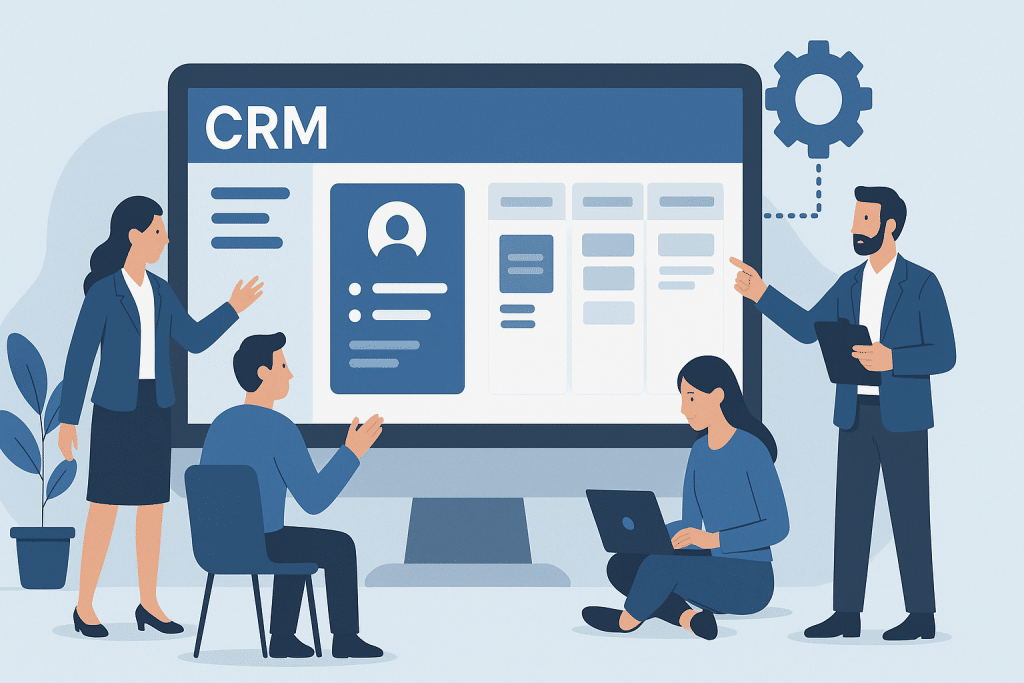
1. Planning & Discovery Requires Time and People
Before you even start window shopping for a CRM system, you need to understand the current state of your business, your existing processes and to define your future goals. This is not something that can be accomplished in a day. It also requires the involvement of key players from the executive team, the technical team and, most importantly, actual users.
- Identify Stakeholders: Involve key users from every department (sales, marketing, customer service, IT, and management) from the outset. Their input is invaluable for selecting the right system and ensuring adoption.
- Assess Current Processes: Document your existing sales, marketing, and customer service workflows. Where are the pain points you want your CRM to address?
- Have Clear Objectives: What do you want your CRM to achieve? Is it to increase sales by 15%, improve customer retention by 20%? Every decision should be guided by specific, measurable goals.
- Data Audit & Cleansing: You’ll need to prepare your existing customer data. This often involves cleaning up duplicates, correcting errors, and standardizing formats. As they say, “garbage in, garbage out.”
2. The Market is Flooded with CRM System Options
Choosing the right CRM system won’t be easy. Industry giants like Salesforce, Zoho, and HubSpot are vying for your business dollar alongside open-source solutions like SugarCRM. Your discovery phase will focus on identifying which option best addresses your needs.
- Match Features to Needs: Does the CRM offer the features your team needs? Consider sales insights, marketing automation, customer service ticketing, reporting, and analytics. What is it that will help your company succeed?
- User-Friendliness: If the system isn’t intuitive no one will use it. There are tons of tasks and applications vying for your workers time and attention. If your CRM feels more like a chore than a tool, you won’t reap the benefits.
- Scalability: Choose a system that can grow with your business. Will it support future expansion, increased users and data volume?
- Integration Capabilities: Your company doesn’t operate in a vacuum, and neither does your CRM. Ensure that it integrates with your existing email platforms, accounting software, and marketing automation systems (if you have them).
- Budget & Hidden Costs: As with most major projects, it’s wise to budget an extra 10-15% for unforeseen expenses. Beyond licensing, there’s implementation, customization, data migration, training, and ongoing support to think about.
3. You Can (and Should) Make it Yours
Once you’ve selected your CRM, it’s time to tailor it to your unique business processes.
- CRM Setup: Figure out who needs access to what and configure user roles, permissions, dashboards, and basic settings.
- Workflow Automation: One of the biggest benefits of having a modern, integrated CRM is automating repetitive tasks. An implementation partner can help to map out and automate workflows for nurturing leads, sales follow-ups, service requests, and more.
- Custom Fields & Modules: No two businesses are exactly alike and you will have unique data points. Any good CRM system will allow you to customize fields and even create new modules to capture the information essential for your operation.
- Integrations: Connecting your CRM to other systems (e.g., your email, ERP, marketing platform) ensures you get a unified view of your customers and avoids data silos.
4. Data Migration is Difficult, but Necessary
Obviously, if you’re a new business and don’t yet have reams of customer data to import, this will be much easier. If you’re an established business, on the other hand, transferring your existing data into a new CRM can be time consuming, but it is critical.
- Data Mapping: Carefully map your old data fields to the new CRM.
- Cleansing & De-duplication: We said it once, but we’ll say it again: “garbage in, garbage out.” The best time to clean up your data is before migration. The second best time is during migration. Making sure only accurate, relevant, and non-duplicate data makes it into the new system will be key to its success.
- Phased Migration: For larger datasets, consider a phased migration to minimize disruptions and allow for validation in easier to work with chunks.
5. Training & User Adoption are Key to a Successful CRM implementation
Even the best CRM system is worthless if your team doesn’t use it. User adoption is arguably the most important metric you can use to measure the success of your CRM system implementation.
- Comprehensive Training Programs: Provide role-specific CRM training sessions. Don’t just focus on the “how to” — explain why it matters to their daily tasks and business goals.
- Ongoing Support: Establish clear channels for ongoing support, whether it’s through an internal team, an external consultant, or the CRM vendor directly.
- Management Strategy: Prepare your team for the change. Communicate the benefits, address concerns, and actively solicit feedback. Identify “CRM champions” who advocate for the system internally and help drive adoption.
- Incentivize Adoption: Consider linking CRM usage to performance metrics or offering incentives to encourage engagement. Getting users to make using the CRM a habit won’t be easy, but it will be essential, so use every tool at your disposal.
6. You Need to Test Thoroughly Before Going Live and Have a Post-Implementation Support Plan
- Thorough Testing: Before going live, rigorous testing is essential. This is where you’ll identify and fix issues that may not have been anticipated during the planning stages.
- Phased Rollout: For large organizations, a phased rollout (department by department, or region by region) can help limit disruptions.
- Continuous Optimization: CRM implementation isn’t a one-time task. You’ll need to monitor performance, gather feedback, and make adjustments. This includes staying abreast of new features, CRM integrations and even AI advancements.
The Benefits Are Worth the Effort
While the journey can be complicated, and even a little nerve-wracking, the benefits of a well-executed CRM system are transformative.
- Enhanced Customer Experience: A 360-degree view of your customers helps you personalize your interactions and deliver proactive service.
- Increased Sales & Marketing Efficiency: Streamlined workflows, automated tasks, and better lead management can improve conversion rates.
- Improved Collaboration: A centralized data hub turns departments from silos into integrated units.
- Smarter Business Decisions: Analytics and reporting offer actionable insights into customer behavior and business performance.
- Sustainable Growth: A robust CRM provides a foundation for sustainable business expansion.
Implementing a CRM system is a significant investment in your business’s future. By getting ahead of the game and knowing what to expect you can ensure your CRM becomes a powerful asset, rather than just another headache. If you focus on planning, adoption and stay nimble enough to make ongoing optimizations, your reward will be improved efficiency and better relationships with your customers.
Ready to explore how a CRM implementation can transform your business? Contact CRM Experts Online today for a personalized consultation.

Terrence is a journalist, editor and producer from New York City with over 18 years of experience. His work has appeared on Engadget, Wired, The Verge, MusicTech, 1Password and more. He has also composed music for podcasts and feature films, served as a podcast producer, video editor and photographer. In his spare time, Terrence collects hobbies at an alarming rate.